Best Pokie Machine to Play in Australia: 2026 Guide
 Available in AU
- Online Pokie Games in Australia
- Pokie Popularity and Economic Impact
- Physical Pokie Machines and Regulatory Obligations
- Free‑to‑Play Pokie Options
- Understanding Pokie Odds and RTP
- Pokies in Australian Casinos
- Variety of Pokie Game Themes
- Playing Pokies for Real Money
- Pokie Mobile Apps and Software Interfaces
- Tips to Maximize Return on Pokie Play
Online Pokie Games in Australia
Search for an online pokie machine from an Australian IP address and you will find plenty of offshore sites willing to take a deposit. What you will not find is a single one of them holding an Australian licence for that activity, because no such licence exists. This is the first thing to understand about pokie machine games online in Australia: availability and legality are two separate questions, and the market answers them differently.
What the Interactive Gambling Act actually restricts
The Interactive Gambling Act 2001 makes it an offence for an operator to offer real-money gambling — including online pokie machine real money games — to people living in Australia. The law is written to target the business on the supply side, not the person placing the bet. That distinction matters when you are trying to work out what an online pokie machine simulator or a real-money slot site is legally allowed to do here, and who carries the risk if it doesn’t.
Before you spin the reels, it pays to know what each casino actually offers behind the scenes, from welcome perks to how fast you can access your winnings. Here’s a quick breakdown to help you compare your options at a glance.
License: Curacao · Bonus: 100% up to A$500 + 200 free spins, 10x wagering · Payout speed: crypto 30-60 minutes, fiat 1-5 days · Min. deposit: A$10 Licensed in Curacao, this casino pairs a straightforward match bonus with free spins, and crypto users can expect notably quick payouts compared to fiat withdrawal times.
Bonus: up to A$7,500 + 550 free spins across 10 deposits, 50x wagering · Payout speed: crypto under 1 hour, PayID 1-3 business days · Min. deposit: A$20 (A$30 to qualify for the bonus) This operator spreads a large bonus package across multiple deposits, giving you room to build up your balance over time, with crypto withdrawals processed particularly fast.
License: Curacao eGaming OGL/2024/923/0383 (Antillephone N.V.) · Bonus: up to A$2,000 + 100 free spins across 2 deposits · Min. deposit: A$30 Holding a Curacao eGaming license under Antillephone N.V., this casino offers a two-deposit bonus structure with free spins attached, backed by a modest entry deposit requirement.
License: Tobique Gaming Commission · Bonus: up to A$8,000 + 400 free spins across 4 deposits · Payout speed: crypto ~10-15 minutes, fiat 1-5 days · Min. deposit: A$30 Licensed by the Tobique Gaming Commission, this casino stands out for a sizeable four-deposit bonus package and swift crypto payout times.
License: Curacao · Bonus: up to A$10,000 multi-stage + 500 free spins · Min. deposit: A$20 (POLi) With a multi-stage bonus reaching a high total plus free spins, this Curacao-licensed casino also supports POLi deposits at an accessible minimum.
License: Curacao eGaming (Hollycorn N.V., since 2017) · Bonus: 225% up to A$1,540 + 600 free spins across 4 deposits, 20x wagering · Min. deposit: A$20-30 (depends on the offer) Operating under a long-standing Curacao eGaming license via Hollycorn N.V., this casino offers a generous percentage match bonus with free spins across several deposits.
License: Curacao Gaming Control Board OGL/2023/176/0095 (Hollycorn N.V.) · Bonus: up to A$5,000 + 300 free spins across 4 deposits Licensed by the Curacao Gaming Control Board through Hollycorn N.V., this casino provides a solid multi-deposit bonus with a substantial free spins allocation.
License: Curacao eGaming (Roby Games Ltd) · Bonus: 100% up to A$750 + 200 free spins Licensed under Curacao eGaming via Roby Games Ltd, this casino keeps things simple with a straightforward matched deposit bonus and free spins.
Bonus: 100% up to A$750 + 200 free spins, 35x wagering · Payout speed: crypto 30-120 minutes, fiat 24-72 hours · Min. deposit: A$30 This casino combines a matched bonus and free spins with fast crypto processing and reasonably quick fiat withdrawal turnaround.
License: Curacao eGaming OGL/2023/174/0082 (Dama N.V.) · Bonus: up to A$10,000 + 500 free spins across 4 deposits · Min. deposit: A$15 Licensed under Curacao eGaming via Dama N.V., this casino offers one of the more substantial multi-deposit bonus packages alongside a low minimum deposit.
An Australian resident who opens an account with an offshore operator and plays real pokie machine games online is not committing an offence under this law. The operator is. That asymmetry is why offshore casino-style sites keep operating despite the ban: enforcement against a company registered outside Australian jurisdiction is difficult, while enforcement against millions of individual players was never the law’s design. None of this changes the underlying fact that there is no domestic licence covering online pokie machine software of this kind, and no regulator here is issuing one. Any site claiming Australian licensing for online casino-style pokies is not describing a real product.
Why "play pokie machine online" doesn’t mean what it does for sports betting
Australians can legally bet online on sport and racing through state- and territory-licensed operators. That legal pathway simply does not exist for online pokie machine games. The two are often confused because both involve placing a bet from a phone or laptop, but the legal architecture underneath them is different. Sports and racing wagering has a licensing regime built for it. Online casino-style gambling, which includes pokies, poker and blackjack played for real money over the internet, was placed off-limits to Australian-facing operators by the same Act that permits the sports betting model to function.
This is not a grey area that depends on which state you’re in. The prohibition on real-money online pokie machine games sits at the Commonwealth level, so it applies uniformly whether you’re in Sydney, Darwin or Hobart. What varies by state is licensing for other verticals — wagering, lotteries — not this one.

How online pokie machine games differ from what’s in a venue
A physical pokie in a pub or club runs on a machine you can see, in a venue subject to in-person compliance checks and cash-handling obligations. An online pokie machine, by contrast, runs as software delivered through a browser or app, hosted by a server that may sit anywhere in the world. The mechanics that generate outcomes — the random number generator behind the reels — are conceptually similar in both formats, but the environment around them is not. A venue-based machine is tied to a physical location that a regulator can inspect. An online pokie machine simulator or real-money title is tied to a server and a corporate entity that, for offshore operators, sits outside Australian regulatory reach entirely.
This has practical consequences for anyone comparing an online pokie machine to a venue machine rather than just anecdotally noticing that one has more themes than the other:
- Oversight: venue machines fall under state gaming regulation with physical audits; offshore online pokie sites answer to whatever licence they hold elsewhere, if any, not to an Australian body.
- Recourse: a dispute with a licensed venue operator has a domestic complaints pathway; a dispute with an offshore online pokie machine operator generally does not.
- Payment handling: venues take physical cash under logged conditions; online sites process deposits and withdrawals digitally, with no Australian rules governing how that offshore operator manages the money.
Paylines and structure carry across formats, taxation doesn’t change
The structural features that define a pokie — paylines, reels, symbol combinations — describe the game mechanics themselves, and those mechanics don’t change much whether the machine is bolted to a venue floor or rendered on a screen. What changes is everything around the mechanics: who is legally allowed to offer the game to you, where your money goes, and what happens if something goes wrong.
One fact holds steady regardless of format: gamblers’ winnings in Australia are not taxed. Whether a win came from a venue machine or, hypothetically, from an offshore online pokie machine, the Australian Taxation Office does not treat gambling winnings as assessable income for the player. This is a statement about how winnings are taxed, not an endorsement of where those winnings can legally be won — the prohibition on real-money online pokie operators offering their product to Australians stands regardless of what happens to a win afterwards.
Legal Risk
It is an offence for an operator to offer real‑money pokies online to Australian residents; the player is not committing a crime, but the operator can be prosecuted.
Where the free versions fit
Not every online pokie machine involves real money. Free-to-play versions exist and operate on different legal footing than real-money online pokies, since no cash changes hands and the Interactive Gambling Act’s core restriction — offering real-money gambling to residents — doesn’t apply to them in the same way. That distinction, and how free-play formats actually work, is a separate subject covered elsewhere in this guide rather than here.
The scale behind the machines
The volume of money moving through pokies generally gives some sense of why this category draws so much regulatory attention in the first place. In the 2020-2021 financial year, Australians placed bets worth almost AUD 150 billion on electronic gaming machines. That figure covers electronic gaming machines as a whole rather than the online segment specifically, but it illustrates the size of the wagering activity that any legal framework touching pokies — online or physical — has to contend with. A market of that scale is precisely why the Interactive Gambling Act draws its line where it does: not around whether Australians can access an online pokie machine at all, since offshore access exists in practice, but around who is permitted to legally offer one to them.
Pokie Popularity and Economic Impact
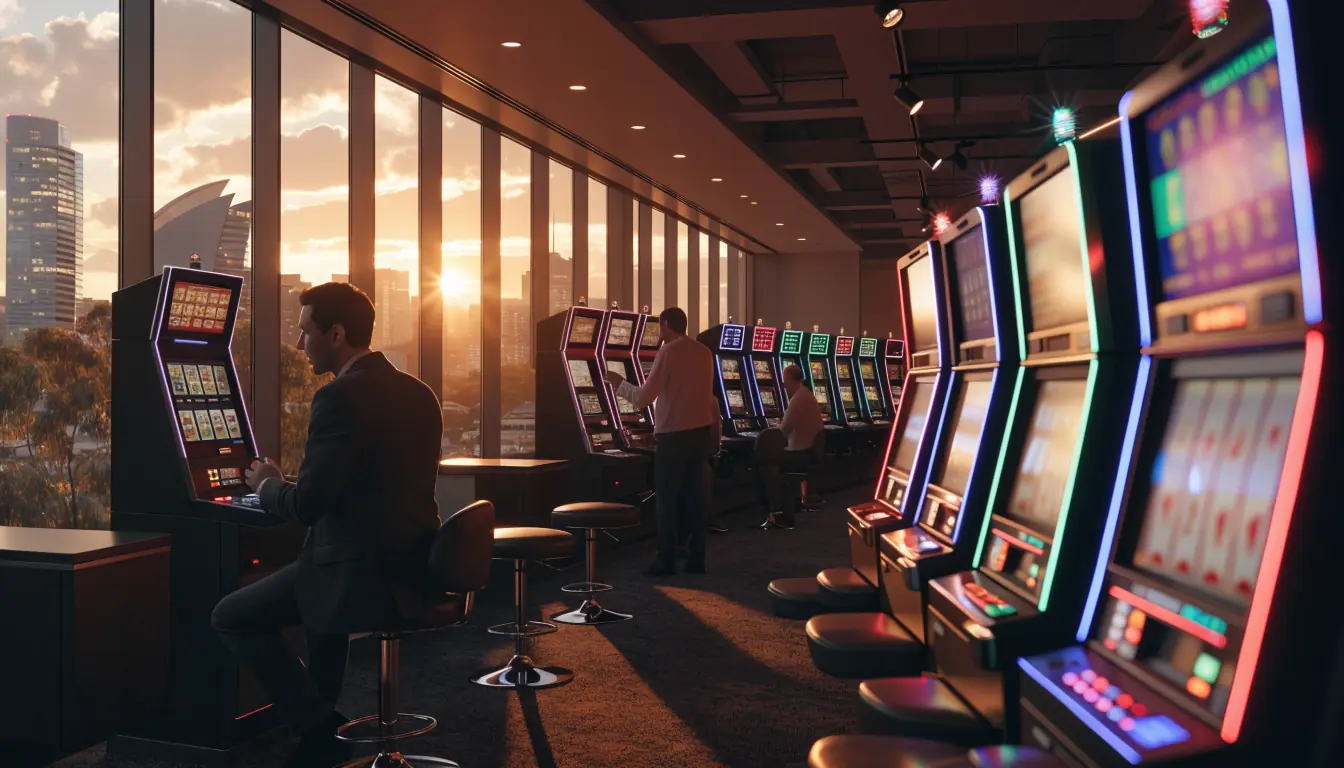
Walk into almost any pub or club in Australia and you’ll find a row of pokies machines glowing near the bar. That’s not a coincidence tied to one state or one licensing regime — electronic gaming machines are a fixture of venues right across the country, and the scale of money moving through them puts pokies among the most heavily used forms of gambling in Australia.
The numbers behind that everyday scene are large enough to be worth stating plainly. In the 2020‑2021 financial year, Australians placed bets worth almost AUD 150 billion on electronic gaming machines. That figure is turnover — the total value of bets made, not money spent, since most of it cycles back to players as winnings before being wagered again. What actually left players’ pockets that year was closer to AUD 12 billion in net losses, which works out to about AUD 608 per person on a per‑capita basis across the population. That per‑capita figure is a useful way to read the scale of the market: it’s not describing a subset of heavy players, it’s an average spread across everyone, which tells you how deeply pokies are embedded in ordinary spending rather than confined to a small group of high rollers.
Located in pubs, clubs or casinos, they operate with cash, are subject to state licensing and AML obligations, and winnings are not taxed.
Demo versions run in a browser, involve no real money, are not regulated by the Interactive Gambling Act, and therefore carry no tax or AML reporting requirements.
More recent turnover data tells a similar story from a different angle. According to complyadvantage.com, pokies generated AUD 191.2 billion in gambling turnover in 2023. That’s a single source reporting on a different measurement window than the FY2020‑2021 figures above, so treat it as a separate data point rather than a continuation of the same series — the two numbers aren’t directly comparable, but both point in the same direction: pokies turnover in Australia sits in the tens or hundreds of billions depending on how and when it’s measured, and that scale has been consistent rather than a one‑off spike.
How much of the world’s pokies are in Australia
One statistic gets cited to explain why the market feels saturated: how many of the world’s poker machines actually sit in Australian venues. Here the sources disagree, and it’s worth naming that disagreement rather than picking a side. One figure puts Australia’s share at 3% of the world’s pub and club poker machines. A separate figure puts it at closer to 18%. That’s a large gap — six times apart — and nothing in the available data resolves it. What can be said with more confidence is the on‑the-ground pattern both figures are trying to describe: pokies are not a niche offering restricted to casino floors in Australia. They’re standard equipment in pubs and clubs nationwide, which is a very different distribution model from markets where slot machines are confined to licensed casino premises only.
Turnover versus loss: two different numbers
It’s easy to conflate "how much was bet" with "how much was lost," and the pokies data makes clear why that distinction matters.
| Measure | What it represents | Figure (FY 2020‑2021) |
|---|---|---|
| Turnover | Total value of bets placed | Almost AUD 150 billion |
| Player loss | Net amount lost after winnings returned | About AUD 12 billion |
| Per‑capita loss | Loss spread across the population | AUD 608 |
Turnover is the gross figure that gets quoted most often because it’s the biggest number, but it overstates what pokies actually cost players — most of that AUD 150 billion was returned to players as winnings and rewagered multiple times before the session ended. The player loss figure is the one that reflects actual economic impact: money that left the gambling economy and didn’t come back. Both numbers matter, but for different reasons. Turnover indicates how much activity moves through the machines; loss indicates how much that activity actually costs the people playing.
What this means for how widely pokies are used
None of these figures single out online play, free‑play versions, or casino‑specific machines — they describe the pokies market as a whole, spanning venues across every state and territory. That’s the point worth taking from the data: pokies aren’t a marginal gambling product in Australia. The turnover figures are large enough to place them among the biggest single categories of gambling activity in the country, and the per‑capita loss number suggests that impact isn’t concentrated in a small pool of players but distributed across a broad base.
That said, none of the figures above say anything about which specific machines pay better, which venues offer different odds, or how individual games compare to one another — that’s a separate question from how much money moves through the category as a whole, and it isn’t something the turnover and loss data can answer. What the data does establish is scale: pokies generate turnover in the tens of billions annually by one measure and close to AUD 191.2 billion by another, and the losses attached to that activity run into the billions each year, distributed at a rate of hundreds of dollars per person across the population. That’s the economic footprint behind a machine that, on the surface, looks like nothing more than a screen and a few buttons near the bar.

Physical Pokie Machines and Regulatory Obligations
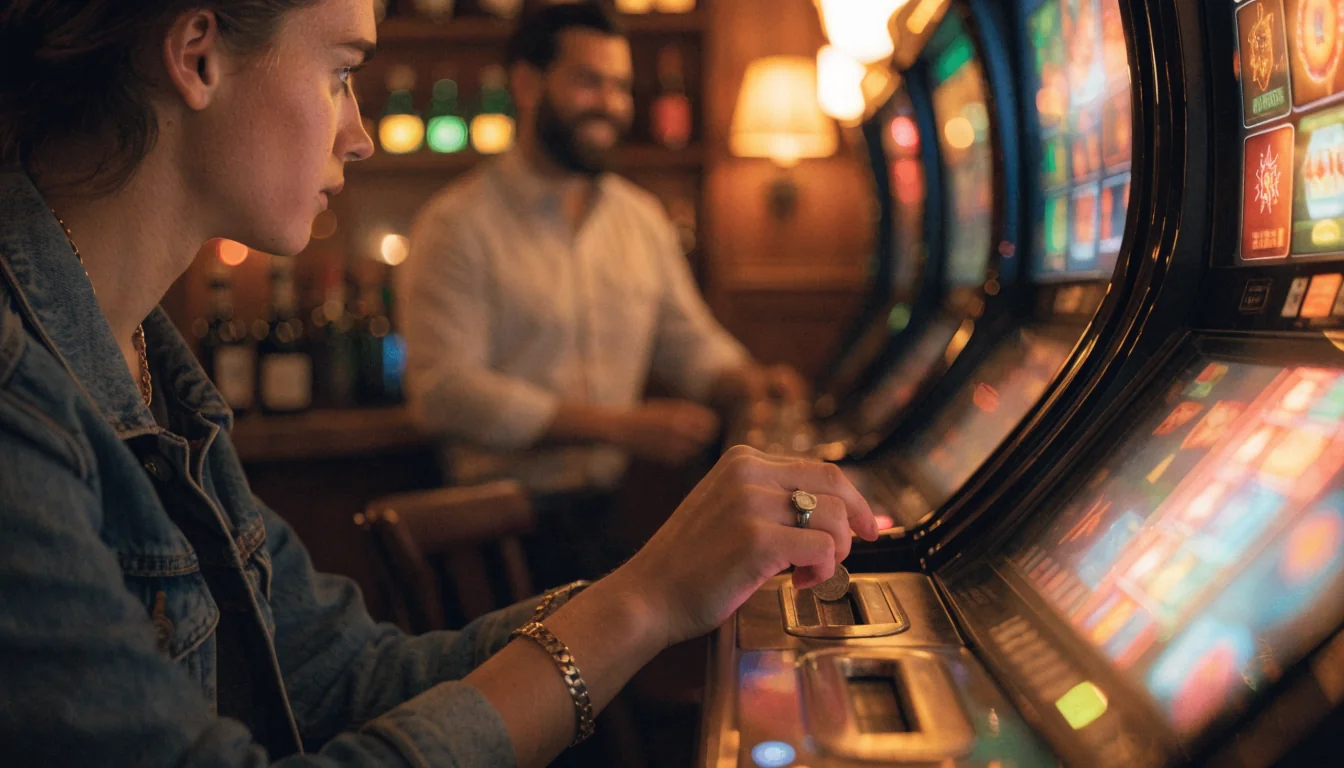
A physical pokie machine is a piece of regulated infrastructure before it is anything else. Every unit installed in a pub, club or casino sits inside a licensing and reporting structure that has nothing to do with how the reels are themed or what the jackpot looks like. Electronic gaming machines operate this way in every Australian state, in the Australian Capital Territory and in the Northern Territory — the machine on the floor of a venue is the same regulatory object wherever you find it, even though venue rules and machine counts vary by jurisdiction.
This is also where physical pokies part ways from the other formats covered elsewhere on this page. A free-play version run in a browser carries no cash-reporting obligation because no cash moves through it. An online real-money pokie is not something a licensed Australian venue can offer at all, since the Interactive Gambling Act prevents that model from existing domestically. A physical machine, by contrast, takes cash directly, and that single fact is what triggers everything described below.
What the operator has to do, by scale
The obligations attached to a venue scale with how many machines it runs:
- Venues with up to 15 pokies — must register with AUSTRAC, keep identification records on players where required, and submit suspicious matter reports when activity looks irregular.
- Venues with more than 15 pokies — carry a heavier load: appointing a compliance officer, running risk assessments, implementing an AML/CFT program, performing customer due diligence, and reporting any cash transaction over AUD 10,000.
Neither tier is optional, and neither is a formality layered on top of the gambling licence — it is a separate, parallel obligation tied to how the machines handle cash, not to how many people play them.
Why cash-heavy machines draw this level of scrutiny
A pokie machine that accepts and pays out physical cash, transaction after transaction, with no account attached to most of that cash, is structurally harder to trace than almost any other payment channel in a venue. That combination — high transaction volume, low traceability — is exactly what makes physical pokies attractive to money laundering, and it’s the reason the obligations above exist in the first place rather than being a generic compliance checkbox.
The pattern regulators watch for is specific: cash goes into the machine in large amounts, the person plays through a minimal amount of it, then cashes out. The withdrawal ticket that comes out the other end looks, on paper, like gambling winnings. It isn’t — it’s a laundering technique using the machine as a conversion point, and it’s the reason cash-transaction thresholds and suspicious matter reporting exist as mandatory obligations rather than best-practice suggestions.
AML Alert
Venues with more than 15 machines must report cash transactions over AUD 10,000 and non‑compliance can lead to civil fines and reputational damage.
What happens when a venue doesn’t comply
An operator that fails to meet these obligations doesn’t just risk a warning letter. AUSTRAC can issue remedial directions requiring specific fixes, infringement notices, or civil fines, and on top of the financial penalty, a venue publicly named for AML failures carries reputational damage that outlasts the fine itself. None of this is theoretical enforcement — it’s the mechanism that keeps a cash-based machine network auditable at all.
What this means if you’re playing
None of this changes anything about the odds on the machine you sit down at. It does mean that if you insert a large amount of cash, play briefly, and cash out quickly, you are reproducing the exact pattern venue staff and monitoring systems are trained to flag — regardless of whether you’re doing anything wrong. Understanding that the machine is instrumented for this kind of monitoring is part of understanding how it actually operates, separate from anything to do with payout mechanics or game design.
Free‑to‑Play Pokie Options
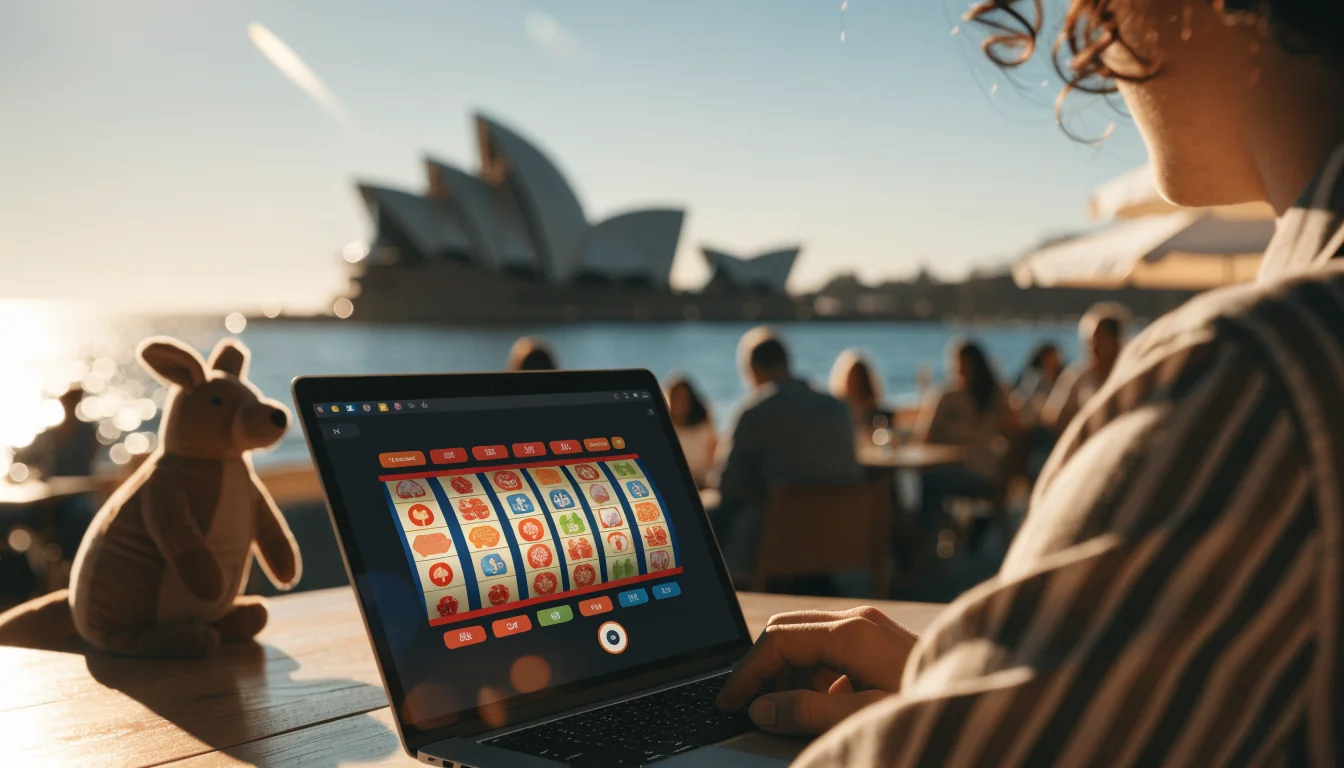
A free-to-play pokie machine runs on the same reel logic and random number generation as its real-money counterpart, but no wager leaves your account and no payout ever reaches it. You press spin, the outcome resolves, a number changes on screen — and that number has no relationship to actual currency. This distinction matters more in Australia than in most markets, because it defines what is legal to offer at all.

The Interactive Gambling Act 2001 makes it an offence for an online operator to offer real-money gambling to Australian residents. It says nothing about free simulations. A game that never processes a deposit, never pays out cash, and never allows a withdrawal falls outside what the Act regulates. That is the entire reason demo pokies exist as a legal category here: they are built to sit outside the scope of a law written around real-money transactions, not around game mechanics.
This is also why you will find free pokie versions hosted from servers and companies that cannot legally take an Australian bet. The software itself — the reel set, the paytable, the bonus round — may be identical to a licensed product sold overseas. What changes is the absence of a cashier. No deposit screen. No withdrawal screen. No currency selector. Strip those away and the same game moves from prohibited to permitted.
Why free versions are offered
Software studios build demo modes to let a game be evaluated without triggering the licensing and payment obligations that come with real-money play. A free version can be embedded on comparison sites, distributed through apps, or bundled into a wider platform without the operator needing a local gambling licence — because it isn’t gambling in the legal sense. No stake is placed, so nothing is at risk and nothing is won.
Free‑play pokies do not generate taxable winnings because no real currency is involved; the credit balance has no cash value.
For players, the practical use is straightforward: you can see how a title’s reels move, how often bonus symbols land, and how a jackpot feature triggers, without spending anything. What you cannot do is treat the session count or the swing of results as a preview of what would happen if money were involved. A demo credit balance resets or tops up automatically. A real balance does not.
What doesn’t carry over
Two things attached to real-money play in Australia simply don’t exist in the free version, because there’s no real money to attach them to:
- Winnings tax treatment. Gamblers’ winnings in Australia are not taxed — but this only has meaning where a win is actual currency. A free-play jackpot pays out in credits with no cash value, so the question of taxation doesn’t arise.
- Operator tax obligations. Taxation of gambling operators varies by state and by type of gambling service, again a framework built around turnover and real payouts. A free demo generates neither, so it sits outside that structure entirely.
This is the cleanest way to separate the three formats you’ll encounter under the umbrella of "pokies": a licensed real-money product (not available from a domestic online operator, since no such licence exists), an offshore real-money product (not illegal for you to access, but not sanctioned or regulated here either), and a free demo (legal, unregulated as gambling, and financially inert by design).
What free play won’t tell you
A free pokie is useful for learning the interface — where the paytable sits, how autoplay is configured, what triggers a bonus screen — but it is not a reliable rehearsal for real stakes. Demo balances are often set generously and reset without friction, which changes how a session feels compared to one where every spin draws from money you actually deposited. Treat it as a way to understand mechanics, not as evidence of what a real balance would do over the same number of spins.
Understanding Pokie Odds and RTP
Every pokie is built around a random number generator that decides the outcome of each spin independently of the one before it. There is no mechanism inside a machine that tracks how long it has been played, how much has been fed into it, or what it "owes" to a player. Whatever happened on the last hundred spins has no bearing on the next one. This is the first thing worth understanding before any talk of odds or payback percentages: the machine does not warm up, cool down, or become "due" for a win.
Return-to-player, or RTP, describes the proportion of all money wagered on a game that is returned to players over a very large number of spins. It is a statistical average calculated across millions of rounds, not a promise about any single session. A machine can carry a high RTP and still produce a losing night for the person sitting in front of it, because the figure only becomes meaningful at scale. Odds work the same way — they describe the probability of hitting a given combination, not a guarantee that it will appear within any set number of tries.
Volatility sits alongside RTP as the other variable worth knowing. A low-volatility game pays smaller amounts more often, which smooths out the swings between wins and losses. A high-volatility game pays rarely but can pay large amounts when it does, which produces longer stretches with no return at all. Neither is more "correct" than the other; they simply distribute the same theoretical payback differently over time.
None of this information changes based on where a pokie is played. What does change is the legal footing under which real-money play can happen. In Australia, the Interactive Gambling Act 2001 makes it an offence for operators to offer real-money pokie games online to Australian residents, regardless of what odds or RTP figures a game might advertise. That restriction sits outside the mechanics of the machine itself — RTP and odds are properties of the game engine, not of the legal channel through which it is accessed.
Sound design, spinning reels, and near-miss animations are built to hold attention, but none of it alters the underlying probability of a result. A louder win jingle does not signal a better-paying machine, and a quiet round does not mean the odds have shifted. The numbers governing outcome and payback are fixed in the game’s programming, not in what you hear or see on screen while playing.
Pokies in Australian Casinos
A casino floor runs pokies under a different set of rules than the ones bolted to the wall of a pub or club. The machines look the same to a player pulling up a stool, but the licence sitting behind them, the audits that check them, and the fines waiting for the operator if something goes wrong are specific to the casino as a venue.
That distinction has become sharper in New South Wales. The 2022 NSW Islington Report, commissioned in the wake of money-laundering findings at Sydney casinos, recommended that all pokies in the state move to cashless play by the end of 2028. Read that recommendation for what it is: a report’s proposal, not a law already in force. Cash still goes into machines across NSW today. What has changed is the direction regulators are pushing operators toward, and the timeline attached to that push gives casino operators a fixed point to plan around rather than an open-ended intention.
Money has followed the recommendation in a more concrete way. An amendment to the Casino Control Act 1992 gives regulators the power to fine NSW casino operators up to AUD 100 million for compliance failures. That figure sets casino-based pokies apart from machines in a pub or club, where the scale of penalties and the compliance apparatus behind them differ — a casino licence carries obligations sized to match the amount of cash that moves through its floor.
Tax treatment adds another layer that varies by jurisdiction. Taxation of gambling operators in Australia is not uniform: it changes by state and by the type of gambling service offered, so a casino’s pokie revenue is not taxed under the same schedule as, say, a pub’s poker machine turnover or a lottery ticket sale. There is no single national rate to point to — the number depends on which state the casino sits in and what licence category its pokies fall under.
For a player, none of this changes what happens at the machine itself — you still insert cash or a card, spin, and cash out. What it changes is what sits behind the machine: the size of the fine an operator risks for letting compliance slip, the reporting it owes regulators, and, if the cashless timeline holds, how you’ll eventually feed money into the game at all. Casino pokies are the same hardware as everywhere else, run under a licence built to carry heavier consequences.
Variety of Pokie Game Themes
Walk into any venue with electronic gaming machines, or scroll through a free-to-play library, and the range of pokie machine games on offer becomes obvious within minutes. Machines are built around visual and narrative themes rather than a single fixed format, which is part of why the category holds the position it does in Australian gambling turnover: variety keeps players cycling between machines instead of settling on one.
Broad categories of theme
Rather than naming particular titles, it helps to think of pokie themes in groups:
- Classic/fruit-machine style — simple symbol sets carried over from mechanical-era design, still common in pubs and clubs.
- Adventure and exploration — narrative reels built around journeys, quests, or discovery, often with bonus rounds tied to the story.
- Mythology and history — themes drawing on ancient civilisations, gods, or historical settings.
- Animals and nature — wildlife-themed symbol sets, frequently paired with cascading or expanding-reel mechanics.
- Luck and fortune — themes built around symbols of chance itself, such as gems, coins, or charms.
- Pop-culture and entertainment tie-ins — licensed or stylistically inspired designs referencing film, music, or television aesthetics.
No two venues stock an identical mix, and free versions typically mirror the same thematic range as their real-money counterparts, since the underlying design work is the same — only the ability to withdraw winnings differs.
Why theme diversity matters more than it looks
Theme variety is not decoration. It’s the mechanism venues and platforms use to keep a large existing player base engaged across many machines rather than concentrated on a few. Australia is estimated to hold 3% of the world’s pub and club poker machines by one count, though another puts the figure closer to 18% — sources disagree sharply here, and neither number should be taken as settled. Either way, that installed base needs enough thematic spread to avoid repetition across a session.
One constant across every theme: any winnings a player collects are not taxed in Australia, regardless of which machine or design produced them.
Playing Pokies for Real Money
Real-money pokie play in Australia works differently depending on where the machine sits. Inside a licensed pub, club, or casino, staking actual money on a pokie is legal and regulated at the state and territory level. Online, the picture reverses: the Interactive Gambling Act 2001 makes it an offence for an operator to offer real-money pokies over the internet to Australian residents. That prohibition falls on the operator, not the machine itself — there’s no domestic version of an online pokie that can legally take a real-money bet from an Australian player. If you’re looking for a real pokie machine experience with actual stakes, the venue floor is where the law allows it, not a browser or an app served from an Australian-facing site.
This split explains why free-to-play and demo versions circulate so widely online — they let a game exist digitally without crossing into the territory the Act blocks. A demo spins the same reels and shows the same symbols, but nothing staked is real money, and nothing paid out is real money either.
The scale of what moves through the legal, venue-based side of the market gives some sense of why the restriction matters. Gambling turnover attributed to pokies reached AUD 191.2 billion in 2023, according to figures reported by complyadvantage.com — a single-source figure worth treating as a data point rather than a settled industry benchmark. On the loss side, government reporting for the 2020–2021 financial year put total player losses from electronic gaming machines at close to AUD 12 billion nationally. That figure reflects money that stayed with venues and operators rather than returning to players, and it’s a useful counterweight to any sense that turnover figures represent money in circulation rather than money spent.
None of this changes by moving to a phone or a laptop. The legal boundary sits with the operator’s location and licensing, not with the device used to place a bet.
Pokie Mobile Apps and Software Interfaces
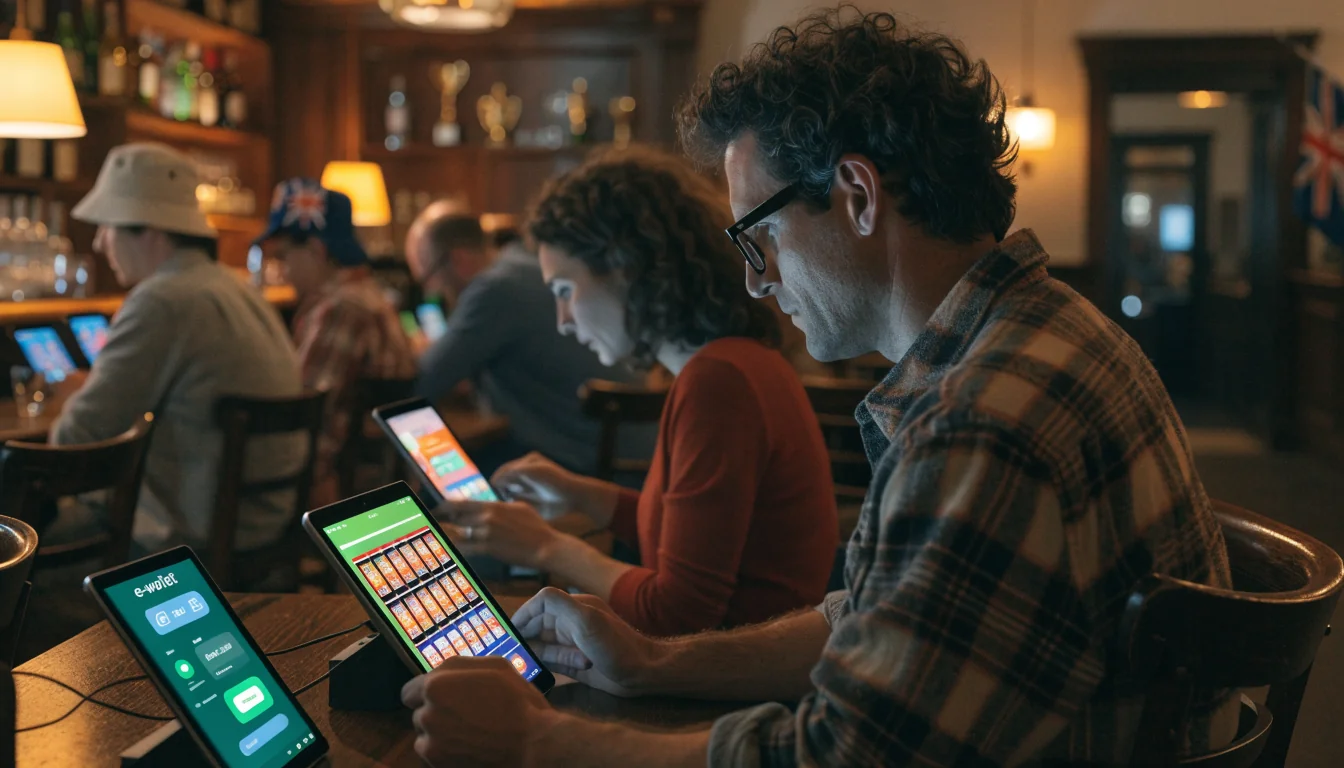
A pokie app on a phone is not a separate product from the machine in a venue or the interface on a desktop — it is the same underlying game logic, delivered through a different layer of software. The difference that matters to you is not the graphics but what sits behind them: how the app connects to a game server, how a jackpot figure is calculated and displayed, and who is accountable for the data moving through that connection.
Behind the app itself is an API — a defined channel through which the software on your phone talks to the operator’s backend. That connection carries the numbers you see: your balance, the outcome of each spin, and, where a game features one, the jackpot total. A progressive jackpot displayed in an app is pulled from a server in real time; the app itself does not generate or store that figure, it only reports it.
This has a direct bearing on money handling. Whatever software layer you use, the venue or platform behind it remains subject to the same obligations as any other pokie operation. An operator running up to 15 machines has to register with AUSTRAC, hold identification records, and file suspicious matter reports. Cross that threshold and the obligations grow: a named compliance officer, documented risk assessments, an AML/CFT program, customer due diligence, and reporting of any cash transaction over AUD 10,000. None of this changes because the interface is a mobile screen instead of a cabinet on a gaming floor — the software only changes how the transaction reaches the operator, not whether it has to be recorded.
Asking what a pokie app costs is really two separate questions: what the app itself costs to install, and what taxation applies to the operator running it. Installation cost is not something regulators publish or standardise. Taxation of the operator, by contrast, is set at state level and varies depending on the type of gambling service being offered — there is no single national rate that applies uniformly across app-based, venue-based, or other formats.
Tips to Maximize Return on Pokie Play
Every machine runs on a fixed generator behind the reels, so no timing trick, betting pattern or "hot machine" theory changes what comes next. The only variable you control is how you manage the session: set a loss limit before you start, and treat the RTP figure listed on the game as a long-run average, not a promise for any single spin.
Watching your own behaviour also matters, because some patterns get flagged for reasons that have nothing to do with luck. Feeding a machine large or repeated amounts of cash, playing briefly, then cashing out immediately is treated as a red flag by AML monitoring. So is moving between venues to redeem small amounts in quick succession. If your habits resemble either pattern, expect extra identification checks or reporting — it’s a compliance response, not a sign anything is wrong with the machine.
If you feel your play is becoming compulsive, Gambling Help Online and BetStop offer support and self-exclusion tools.
Can I play on an Australian online casino on mobile?
You can access offshore sites from your mobile device, but no operator holds a domestic licence to offer real-money online pokies to Australians, so any platform you use is unlicensed and outside local regulatory reach.
Is online gambling legal in Australia?
Sports and racing wagering are legal through state-licensed operators, but offering real-money online casino-style pokies to Australians is prohibited at the Commonwealth level, so there is no domestic licence for this activity.
What law governs online gambling in Australia?
The Interactive Gambling Act 2001 makes it an offence for operators to offer real-money online gambling, including online pokies, to Australian residents.
How do criminals launder money through pokies?
They insert large sums of cash into machines with minimal play, then cash out to create a record of legitimate winnings; structuring deposits across venues and purchasing winning tickets from players are also common methods.
What are the red flags for pokies-related money laundering?
Key indicators include unusually high cash access, large cash insertions followed by minimal play and immediate cash-out, frequent small redemptions across different venues, and customers refusing identification or using multiple player cards.
Created by the ”Pokies Live Guide” editorial team.