
Casinos That Accept Apple Pay in Australia
 Available in AU
- Apple Pay in the Australian Gambling Landscape
- Australian Online Casinos Supporting Apple Pay
- Online Pokies that Accept Apple Pay in Australia
- Apple Pay Deposit Process and Limits
- Using Apple Pay for Casino Games
- Apple Pay Compatibility with Other Payment Options
- Apple Pay Bonuses and Deposit Promotions
- Casino Sites that Offer Apple Pay Deposits
- Why Apple Pay Can’t Be Used for Withdrawals
- Withdrawal Options When Using Apple Pay
Apple Pay in the Australian Gambling Landscape
Apple Pay sits at an odd intersection in Australia’s gambling market. The payment rail itself is uncontroversial: Commonwealth Bank, ANZ, Westpac and NAB all support it, so most iPhone or Apple Watch owners with an everyday debit card can add it to their wallet without friction. Banking infrastructure isn’t the obstacle.
The obstacle is what the money is being sent to. The Interactive Gambling Act 2001 makes it an offence to offer online casino games — slots, roulette, blackjack — to people in Australia. That law targets operators, not the payment method or the player, but it shapes everything that follows in this guide. No casino accepting Apple Pay does so under an Australian licence, because no such licence exists for this type of gambling.
So when this article refers to "Apple Pay casinos," it means offshore-licensed sites that happen to accept Australian bank cards through Apple’s wallet, not a locally regulated product. That distinction matters more than the mechanics of tapping to pay.
Australian Online Casinos Supporting Apple Pay
No casino operating under an Australian licence can offer online slots, roulette or blackjack to residents — the Interactive Gambling Act 2001 makes it an offence for an operator to provide these games to people in Australia, and no such domestic licence exists for this kind of gambling. The casinos that do list Apple Pay as a deposit option are, without exception, offshore operators reaching Australian players over the internet.

That distinction matters more than it looks. The law targets the businesses that offer the games, not the people who play them. If you’re an Australian resident using an offshore casino site, you’re not committing an offence under the Act. What you give up in exchange is any local protection: ACMA has been explicit that players who use these offshore services have no legal recourse here if something goes wrong, because the operator itself is functioning outside Australian law. There’s no regulator to complain to, no licence number to check against a public register, no ombudsman standing behind the transaction. Whatever assurance you get comes entirely from the operator’s own terms and reputation — not from any authority in this market.
Against that backdrop, "which casinos accept Apple Pay" is really two separate questions: which offshore sites list it as a deposit method, and which of those sites will actually let you get your money back out. The two lists are not the same, and conflating them is where most confusion about Apple Pay casinos comes from.
How common Apple Pay actually is
Out of 158 online casinos reviewed for Australian access, 64 accept players from this market. That’s the pool worth paying attention to — the other 94 either block Australian IP addresses outright or don’t support AUD-denominated play, so they’re irrelevant to the question regardless of what payment methods they list.
Within that pool of 64, payment methods vary widely in what they can actually do. Across the 101 payment methods available at these Australian-accepting casinos, 73 can process payouts and 28 are deposit-only. Apple Pay sits in the second group. It’s accepted at a meaningful number of these casinos as a way to fund an account, but it isn’t part of the 73 that can send money back to you. This isn’t a quirk of any single operator’s policy — it’s a structural limit of how Apple Pay works, which the later section on withdrawals covers in full.
Reviewed casinos 158
Australian‑accepting casinos 64
Apple Pay deposit‑only Yes
Apple Pay payout support No
What "accepts Apple Pay" should mean when you’re checking a site
Because deposit support and withdrawal support are tracked separately at each casino, the practical checklist looks like this:
- Confirm the casino accepts Australian players. Not every offshore site does, and this is the first filter — a casino with Apple Pay listed is useless to you if it doesn’t take AUD accounts or Australian residents at all.
- Confirm Apple Pay appears specifically in the deposit methods. Some cashier pages bundle “mobile wallet” options together without naming Apple Pay directly; if it’s not listed by name, don’t assume it works.
- Check what the same cashier page lists for withdrawals. This will not be Apple Pay — it can’t be, for reasons the payments landscape above already shows — but it tells you what you’re committing to before you deposit anything.
- Treat licensing claims with scepticism. Because there’s no domestic register to verify against, an operator’s licence badge is only as good as the jurisdiction that issued it. It’s worth knowing where that licence comes from, but it won’t give you the kind of recourse ACMA is describing when it warns about offshore play.
None of this changes based on how well-known a casino’s brand is, or how prominently Apple Pay is advertised on its homepage. The deposit-only nature of Apple Pay is consistent across every one of the Australian-accepting casinos that offer it — it isn’t something a particular operator can extend by policy, because the limitation sits with how Apple Pay itself is built, not with what any individual casino decides to allow.
Where this leaves an Australian player
If your priority is getting money into an account quickly with a method your bank already recognises, Apple Pay does that job well at any of the casinos that list it. If your priority is a payment method that also handles the payout side, Apple Pay was never going to be that method — you’ll need a second option for withdrawals regardless of which casino you choose. The next section looks specifically at where Apple Pay shows up in pokies deposits and what security mechanics come with it; the practical mechanics of limits and fees follow after that; and the withdrawal side gets its own full treatment later, since it depends on a completely different set of payment methods than the one covered here.
Online Pokies that Accept Apple Pay in Australia
If you’re planning to fund your account with Apple Pay, it helps to know upfront how each casino handles bonuses, deposits, and withdrawals before you commit. Here’s a quick rundown of what stands out about each option on this list.
License: Curacao · Bonus: 100% up to A$500 + 200 free spins, 10x wagering · Payout speed: crypto 30-60 minutes, fiat 1-5 days · Min. deposit: A$10 Curacao-licensed with a straightforward welcome package of a 100% match up to A$500 plus 200 free spins at 10x wagering, and a low A$10 minimum deposit makes it accessible. Crypto withdrawals land in 30-60 minutes, while fiat payouts take 1-5 days.
Bonus: up to A$7,500 + 550 free spins across 10 deposits, 50x wagering · Payout speed: crypto under 1 hour, PayID 1-3 business days · Min. deposit: A$20 (A$30 to qualify for the bonus) Offers one of the larger multi-deposit welcome packages here, up to A$7,500 plus 550 free spins spread across 10 deposits, though the 50x wagering is on the higher side. Crypto payouts clear in under an hour, and PayID withdrawals take 1-3 business days.
License: Curacao eGaming OGL/2024/923/0383 (Antillephone N.V.) · Bonus: up to A$2,000 + 100 free spins across 2 deposits · Min. deposit: A$30 Licensed under Curacao eGaming through Antillephone N.V., with a two-deposit welcome bonus worth up to A$2,000 plus 100 free spins and a A$30 minimum deposit.
License: Tobique Gaming Commission · Bonus: up to A$8,000 + 400 free spins across 4 deposits · Payout speed: crypto ~10-15 minutes, fiat 1-5 days · Min. deposit: A$30 Licensed by the Tobique Gaming Commission, with a sizeable four-deposit bonus up to A$8,000 plus 400 free spins. Crypto withdrawals are quick at around 10-15 minutes, with fiat taking 1-5 days.
License: Curacao · Bonus: up to A$10,000 multi-stage + 500 free spins · Min. deposit: A$20 (POLi) Curacao-licensed with a multi-stage bonus reaching up to A$10,000 plus 500 free spins, and a A$20 minimum deposit via POLi for those wanting an alternative funding method.
License: Curacao eGaming (Hollycorn N.V., since 2017) · Bonus: 225% up to A$1,540 + 600 free spins across 4 deposits, 20x wagering · Min. deposit: A$20-30 (depends on the offer) Licensed under Curacao eGaming through Hollycorn N.V. since 2017, offering a 225% match up to A$1,540 plus 600 free spins across four deposits at 20x wagering, with a minimum deposit of A$20-30 depending on the offer.
License: Curacao Gaming Control Board OGL/2023/176/0095 (Hollycorn N.V.) · Bonus: up to A$5,000 + 300 free spins across 4 deposits Holds a Curacao Gaming Control Board licence via Hollycorn N.V., with a four-deposit bonus package worth up to A$5,000 plus 300 free spins.
License: Curacao eGaming (Roby Games Ltd) · Bonus: 100% up to A$750 + 200 free spins Licensed under Curacao eGaming through Roby Games Ltd, with a 100% match up to A$750 plus 200 free spins as its welcome offer.
Bonus: 100% up to A$750 + 200 free spins, 35x wagering · Payout speed: crypto 30-120 minutes, fiat 24-72 hours · Min. deposit: A$30 A 100% bonus up to A$750 plus 200 free spins comes with 35x wagering, and a A$30 minimum deposit applies. Crypto withdrawals process in 30-120 minutes, with fiat payouts taking 24-72 hours.
License: Curacao eGaming OGL/2023/174/0082 (Dama N.V.) · Bonus: up to A$10,000 + 500 free spins across 4 deposits · Min. deposit: A$15 Licensed under Curacao eGaming through Dama N.V., with a generous four-deposit bonus up to A$10,000 plus 500 free spins, and one of the lowest minimum deposits on this list at A$15.
Pokies are the games most Apple Pay deposits fund at Australian-accepting sites, and the mechanism behind the deposit stays the same no matter which title you open afterward. Once the payment clears, the funds sit in your casino balance like any other deposit — the pokie itself has no awareness of how the money got there.
What "accepting Apple Pay" actually means for a pokie
A pokie doesn’t process payments — the casino’s cashier does. When a listing says a game or a site "accepts Apple Pay," it means the operator’s deposit page includes Apple Pay as a selectable option before you load the game client. The pokie library and the payment stack are two separate systems that only meet at the point where your balance updates. This matters because it explains why Apple Pay works identically whether you’re about to spin a three-reel classic or a video pokie with multiple bonus rounds — the payment layer doesn’t distinguish between them.
Offshore risk
Using offshore Apple Pay casinos means you have no local regulator to protect you if something goes wrong.
That separation is also why you won’t find a pokie that "requires" or "excludes" Apple Pay specifically. The acceptance sits at the casino level, in the same list as cards, e-wallets and crypto options. If the operator has integrated Apple Pay into its cashier, every pokie on the site becomes playable with funds deposited that way.
How the deposit reaches the game
The sequence is short and identical across devices:
- You open the casino’s cashier from an iPhone, iPad, or an interface connected to an Apple Watch.
- You select Apple Pay and choose the linked debit card already stored on the device.
- Face ID, Touch ID, or your device passcode authenticates the transaction.
- Apple’s servers generate a one-time token representing the payment — your actual card number is never transmitted to the casino.
- The casino receives the token, confirms the amount, and credits your account balance, which is then available to any pokie on the site.
The token step is the part worth understanding, because it’s the reason Apple Pay is treated as a relatively secure deposit method rather than just a "convenient" one. A stolen or intercepted token is useless for a second transaction — it’s generated fresh each time and tied to that specific payment request. Compare this to typing a card number directly into a casino’s deposit form, where the same 16 digits are reused for every transaction and stored (encrypted or not) somewhere on the operator’s side. With Apple Pay, there’s nothing card-shaped for the casino to store in the first place.
Security features that carry over to every pokie session
Because the payment step happens before the game loads, the security properties of Apple Pay apply uniformly regardless of what you play afterward:
- Biometric or passcode gate. No deposit clears without Face ID, Touch ID, or the device passcode, which means a lost or unlocked phone doesn’t automatically expose your linked card to whoever picks it up.
- Tokenisation. Each transaction gets its own one-time code. The casino’s servers never see, and can never leak, the underlying debit card number.
- Bank-side authorisation. Because most major Australian banks — CommBank, ANZ, Westpac and NAB among them — support Apple Pay natively, the debit card behind the transaction is one your bank already recognises and can flag or block through its own fraud monitoring, independent of anything the casino does.
- No fee layer to exploit. Apple does not charge for using Apple Pay to deposit, so there’s no separate fee calculation on the payment side that could be manipulated or misquoted at the point of deposit.
None of these features are pokie-specific — they protect the deposit, not the game round. The pokie’s own fairness (its random number generator, return-to-player rate, and volatility) is a separate system audited independently of how the balance was funded. Apple Pay makes the money arrive safely; it has no bearing on how a game pays out once you’re spinning.
A concrete example of how this plays out at an operator
Golden Crown accepts Apple Pay as a deposit method, according to one industry review of the casino’s payment options. That review didn’t distinguish between pokies and other games on the site — the Apple Pay button, once enabled, applies to the entire real-money balance, which can then be used on any pokie title the casino offers. This is consistent with how the payment separates from the game library elsewhere: Apple Pay doesn’t get restricted to a subset of games or turned off for higher-volatility titles. It funds the account, and the account funds the play.
Treat this as one documented instance rather than a market-wide guarantee. Whether a specific pokie site accepts Apple Pay depends entirely on that operator’s own payment integration, and the only reliable way to confirm it is to check the casino’s own cashier page before depositing — the list of supported methods there is the actual source of truth, not any third-party summary.
Apple Pay uses one‑time tokens, so the casino never sees your card number and cannot store it.
Why this distinction matters when you’re choosing where to play
Because Apple Pay sits at the casino level rather than the game level, the practical question isn’t "which pokies accept Apple Pay" — it’s "which casinos have Apple Pay in their cashier, and does their pokie library include what you want to play." Reversing that order avoids a common mistake: assuming a specific title has special payment requirements when in reality every pokie on a given site shares the same deposit options.
If you’re comparing operators, the useful checks are:
- Confirm Apple Pay appears as a deposit option on the casino’s own payments page, not just in a review.
- Confirm the debit card you intend to link is issued by a bank that supports Apple Pay — this covers most major Australian banks, but not every card product from every institution.
- Remember that the deposit itself carries no fee from Apple’s side, so any charge you see added at the casino’s end is coming from the operator, not from the payment method.
What doesn’t change based on the game you pick
A few things stay constant no matter which pokie you load with an Apple Pay-funded balance:
- The deposit is one-directional. Apple Pay is available for funding your account, not for pulling money back out — that limitation sits with the payment method itself, not with any particular game.
- The authentication step happens once, at the point of deposit. It doesn’t repeat every time you switch games or increase your bet size within a session.
- The token generated for your deposit is single-use and tied to that transaction — it has no ongoing relationship with your gameplay, win history, or balance once the funds have landed.
Understanding this separation between payment and game is what lets you predict how the system behaves before you commit money to it: the pokie decides how a spin resolves, the cashier decides how a deposit clears, and Apple Pay’s job ends the moment your balance updates.
Apple Pay Deposit Process and Limits
Making a deposit with Apple Pay follows the same sequence every time, regardless of which linked card sits behind it. You open the cashier, select Apple Pay from the list of deposit methods, and confirm the amount. The device then asks for authentication — Face ID, Touch ID, or a passcode — before the transaction goes through. Once confirmed, the funds appear in the casino account immediately, because the transaction runs through the device rather than a manual card-entry form.
This is what "instant" actually means here: there is no batch processing, no waiting for a bank to manually clear the transaction the way some bank transfers require. The deposit clears in the time it takes to authenticate on the device.
What it costs
Apple itself does not charge anything for using Apple Pay to fund a casino account. There is no per-transaction fee, no percentage cut, no monthly charge attached to the Apple Pay layer of the payment. Whatever amount you enter in the cashier is the amount that leaves your linked account and arrives at the casino, assuming the underlying debit card carries no fees of its own.
Cash‑advance risk
Your bank may classify an Apple Pay casino deposit as a cash advance, which can attract immediate interest charges.
That said, "no fee" refers specifically to Apple’s side of the transaction. The debit card linked to Apple Pay is still issued by a bank, and that bank’s own terms apply to how the transaction is categorised — which is where the real cost, if any, can turn up.
The cash-advance question
According to one industry review, some Australian banks may classify a casino deposit made through Apple Pay as a cash advance rather than a standard purchase. This distinction matters because cash advances on credit cards typically carry a different interest structure than ordinary transactions, often starting to accrue interest immediately rather than after a billing cycle.
This is not a rule that applies uniformly across every bank or every card product — it depends on how the individual issuer’s terms define a gambling-related transaction, and that classification can change without notice. Because of this, it is worth checking your own card’s terms and conditions, or contacting the bank directly, before assuming a deposit will be treated as a standard debit transaction. Using a debit card rather than a credit card linked to Apple Pay avoids the cash-advance question entirely, since there is no credit being advanced in the first place.
Deposit size and what limits actually govern it
Apple Pay itself does not impose its own ceiling on how much you can send in a single casino deposit. The limits you encounter come from two other layers instead:
- The card issuer — your bank sets daily or per-transaction limits on the debit card linked to Apple Pay, and those limits carry over regardless of which app or checkout screen you’re using.
- The casino’s cashier settings — each operator sets its own minimum and maximum deposit amounts for each payment method, independent of what your bank allows.
Because neither of these figures is published in a way that holds true across every bank and every casino, there is no single number that applies to "an Apple Pay deposit" in general. What’s accurate is the mechanism: the transaction passes through your card’s existing limits first, then through whatever cap the casino’s cashier applies to that specific method, and the deposit only completes if both allow it.
Bonus eligibility on deposit
One further wrinkle worth flagging on the deposit side, separate from fees or limits: according to one industry review, Apple Pay deposits may not qualify for bonus offers at some Australian-facing pokies sites. This isn’t a limitation of Apple Pay as a technology — it’s a decision some operators make in their own bonus terms, often to manage the cost of promotions across payment methods with different processing profiles. If claiming a deposit bonus matters to you, checking the specific promotion’s terms before depositing avoids a situation where the money lands in your account without the bonus attached to it.
None of this changes how the deposit itself is processed — authentication, tokenisation and settlement work the same way whether or not a bonus applies. It only affects what happens to the funds once they arrive.
Using Apple Pay for Casino Games
Once a deposit clears, the funds sit in your casino account balance and behave like any other credit there — the game itself never talks to Apple Pay directly. You choose a table or a reel, place a stake, and the site draws from that balance the same way it would if you’d deposited by bank card or e-wallet. Apple Pay’s job ends at the deposit stage; what you play with that money afterward is unrelated to how it arrived.
The mechanism that gets the money there is worth understanding, because it explains why the process feels instant. Every time you fund an account from an iPhone, iPad or Apple Watch, the device checks that it’s really you before anything moves. Face ID, Touch ID or a device passcode has to confirm the transaction first — there’s no step where a casino, or anyone else, sees this happen. It’s a local check between you and the device, not a form field on the casino’s site.
What passes on to the casino afterward isn’t your card. Apple Pay generates a one-time token specific to that single transaction, and that token — not your debit card number — is what the operator’s payment processor receives. If the same card is used for ten deposits, ten different tokens are created; none of them can be reused, and none of them expose the underlying card number even if intercepted. This is why Apple Pay deposits are often described as more contained than a typed-in card payment: the casino’s systems never store a number that could be reused elsewhere.
For the player, the practical effect is that authentication and payment happen in the same gesture. There’s no separate password screen, no card entry form, no waiting for a code by SMS. You approve with a fingerprint, face scan or passcode, the token is issued, and the deposit lands. Whatever you do with that balance next — spin, bet, fold — is governed by the game’s own rules, not by the payment method that funded it.
Apple Pay Compatibility with Other Payment Options
Apple Pay sits alongside cards, e-wallets and crypto on the deposit menu at Australian-accepting casinos, but it does not behave the same way once money needs to move in the other direction. Every payment method at these casinos falls into one of two categories: those that handle deposits only, and those that can also process a payout. Apple Pay belongs firmly to the first group.
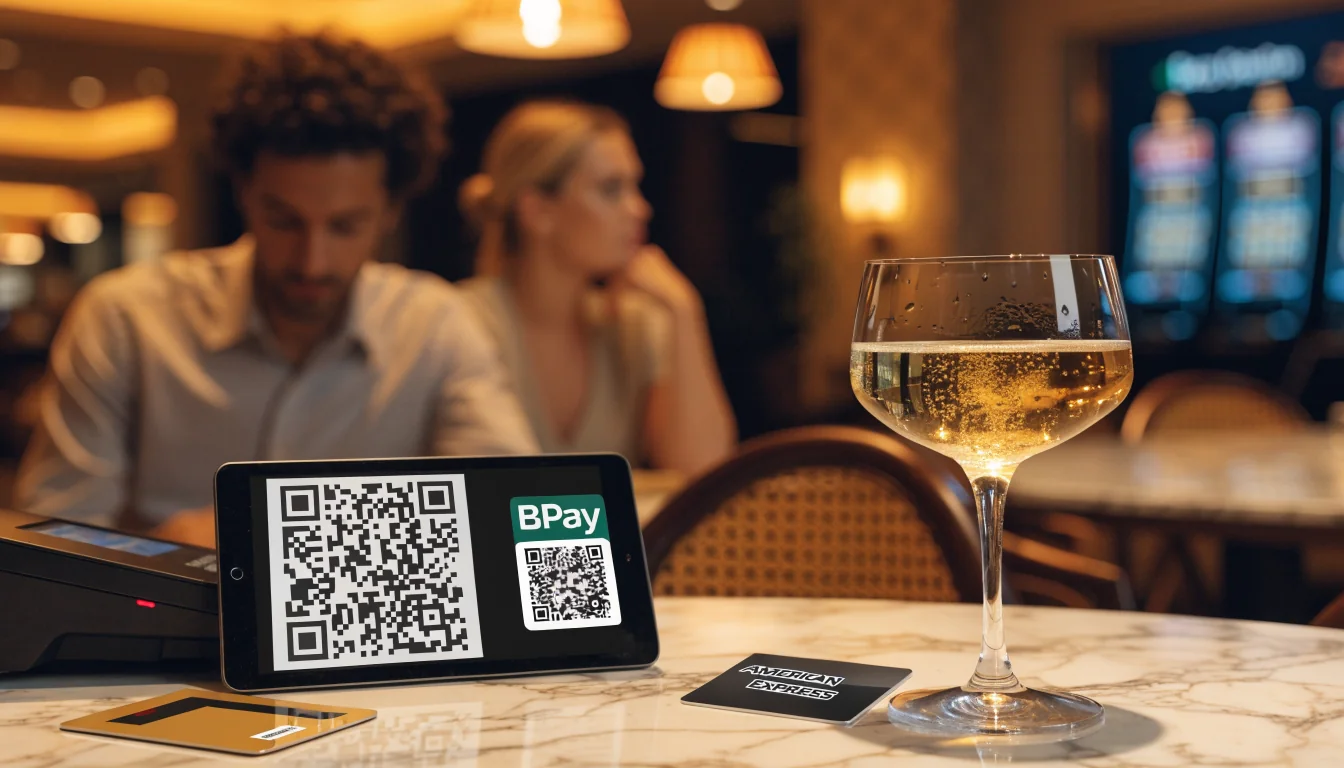
This isn’t a quirk specific to Apple Pay. It’s how the underlying banking rails work. A method that only accepts deposits at an Australian-accepting casino cannot be used for withdrawals there — the same restriction that applies to standard Visa and MasterCard transactions applies here. Once you fund an account with Apple Pay, the casino has no mechanism to send money back through the same channel.
Practically, this means Apple Pay is one tool in a two-part setup rather than a complete payment solution. You deposit with Apple Pay because it’s fast and doesn’t expose your card details to the operator, then you nominate a separate method for cashing out — a bank transfer, an e-wallet, or a crypto wallet, depending on what the casino supports. Neither step depends on the other. Choosing Apple Pay to fund your account has no bearing on which withdrawal options are available to you afterward.
Tokenisation
The process of replacing sensitive card details with a single‑use digital token for each transaction.
It’s worth checking each casino’s cashier page for the withdrawal methods it actually supports before you deposit, since that list determines how you’ll get money out later. Apple Pay won’t appear on it, and that’s expected rather than a gap in the casino’s setup. The split between funding and payout channels is standard across the market, not something unique to how Apple Pay integrates with a given operator.
Apple Pay Bonuses and Deposit Promotions
Apple charges nothing for using Apple Pay to fund a casino account. The transaction cost that sometimes shows up on a statement comes from the bank, not from Apple, and it depends on how that bank chooses to classify the deposit — a matter covered in the section on deposit limits and cash-advance treatment, not here.
Bonus eligibility is a separate question from cost, and the two get confused often. A welcome package or a reload bonus is a term set by the operator, not by Apple Pay itself, and the wagering conditions attached to it apply the same way regardless of payment method — in theory. In practice, according to one industry review, some Australian-facing pokies sites exclude Apple Pay deposits from qualifying for bonus offers, even though the deposit itself processes normally and the funds land in the account without delay.


There’s no way to tell in advance whether a given site takes this position without checking that site’s own bonus terms before depositing. The exclusion, where it exists, sits in the promotion’s fine print rather than in anything Apple Pay does technically — the token-based transaction looks identical to the casino whether or not it’s bonus-eligible. If bonus eligibility matters more than which payment method you use, checking the terms first avoids depositing into a promotion that Apple Pay doesn’t actually qualify for.
None of this changes the deposit mechanics themselves: authentication, tokenisation and settlement work the same way whether or not a bonus is attached.
Casino Sites that Offer Apple Pay Deposits
A verifiable, publicly named list of Apple Pay-accepting sites is short, because most operators disclose their payment stack only in account settings after registration, not on marketing pages. One name that does surface consistently in operator terms is Golden Crown, which lists Apple Pay among its accepted deposit methods.
This limitation is not a flaw in research — it reflects how casinos publish payment information generally. Treat any list you find, including this one, as a starting point to confirm at the cashier page before funding an account, since payment options change without notice.
What to check before relying on a name
- Whether Apple Pay appears as a live option at the deposit screen, not just in a general terms page.
- Whether the listed currency is AUD, since payment method availability can differ by currency.
- Whether the site is one of the 64 casinos known to accept Australian players, since Apple Pay support outside that group has not been verified here.
None of those 64 casinos support Apple Pay for withdrawals — this applies to Golden Crown as much as to any other operator on the list. Apple Pay’s role, wherever it’s offered, is limited to getting money into the account. Whatever comes back out will travel through a different channel entirely, a distinction covered in detail further down this page.
Why Apple Pay Can’t Be Used for Withdrawals
Apple Pay moves money in one direction only: from your linked debit card into your casino account. None of the 64 casinos reviewed that accept Australian players offer Apple Pay as a payout option. That is not an oversight by any single operator — it holds across the entire sample, which points to a structural limit rather than a policy choice any casino could reverse on request.
The reason sits with how Apple Pay is built. It works as a tokenised front end for a card transaction: you authenticate with Face ID, Touch ID, or a passcode, and Apple Pay passes a one-time token to the merchant instead of your card number. That token authorises a payment from you to the casino. There’s no equivalent mechanism for a casino to push funds back to your iPhone or Apple Watch — the system was designed for point-of-sale and app purchases, not for a business paying out a customer. Apple has not built a reverse channel, and no casino can add one on its own.
Instant deposits
Apple Pay provides instant deposits with biometric authentication, making funding your casino balance quick and secure.
This isn’t unique to Apple Pay. Of the 101 payment methods available at Australian-accepting casinos, 73 can process payouts, while 28 — including Apple Pay — handle deposits only. MasterCard and Visa fall into the same category: both are widely accepted for funding an account, but neither can be used to receive winnings. If a method sits in that deposit-only group, no casino terms or account settings will change that. It’s a limit of the payment rail itself.
What this means in practice
Once you deposit through Apple Pay, your casino account holds real funds that came from your linked card, but the exit path for those funds runs through a different method entirely. You’ll need to nominate a separate payout option — typically a bank transfer, e-wallet, or crypto wallet, depending on what the specific casino supports — before you can withdraw anything.
This split between funding method and payout method is normal at Australian-accepting casinos generally, not something specific to Apple Pay users. Anyone depositing by card faces the same requirement to set up an alternative withdrawal method, because cards as a category don’t support payouts either.
Before assuming a workaround exists, it’s worth being direct about what isn’t published anywhere: no casino discloses a way to route withdrawals back to Apple Pay, and none of the reviewed operators list it as a payout method under any circumstances. That’s not a gap in this article — it’s a gap in what any operator or Apple itself makes available.


Knowing this before you deposit saves a step later. Check which payout methods a casino actually supports — bank transfer, e-wallet, or crypto — and have your identity verification ready, since Australian-accepting casinos require ID checks before releasing any withdrawal, regardless of how the deposit was made.
Withdrawal Options When Using Apple Pay
Since Apple Pay handles deposits only, you need a separate method on file before you can pull winnings out. The casino’s cashier will show whatever payout options it supports once your account is verified, and you pick from that list rather than reversing the Apple Pay transaction.
A card payout — the option most players default to, since a debit card is usually already linked for deposits — routes back to the same bank account and can take one to three business days to land, depending on the bank’s own processing schedule. That range is not something the casino controls; it reflects how the receiving bank clears incoming transfers.
Before requesting a withdrawal, check which methods your account is set up to receive. If the linked debit card doesn’t support payouts through that casino, you’ll need to add another method — an e-wallet, a bank transfer, or a crypto wallet, where available — and complete verification for it separately. Skipping this step is the most common reason a withdrawal request stalls after approval.
None of this changes what Apple Pay does at the front end: it stays a deposit tool, and the exit route is always a different rail entirely.
Is Apple Pay safe for casino deposits?
Yes, it uses Face ID, Touch ID or a device passcode for authentication and generates a one-time token, so your card numbers are never shared with the casino.
Are there fees for depositing with Apple Pay?
Apple does not charge any fees, though some Australian banks may classify casino deposits as cash advances, which can attract higher interest rates on credit cards.
Which payment methods can be used for withdrawals at casinos that accept Australian players?
You can use PayID, cards, e-wallets, and crypto, but not Apple Pay — it is strictly deposit-only across all 64 Australian-accepting casinos reviewed.
What are the typical withdrawal times for crypto casinos?
Crypto withdrawals are the fastest option, often completed within minutes after approval — for example, Wild Tokyo has a median BTC withdrawal time of 13 minutes.
How can I manage deposits and withdrawals responsibly?
Complete your KYC early with a valid photo ID, proof of address, and payment method proof, making sure names and addresses match across all documents to enable instant payouts.
What is the step-by-step complaint process for Australian players?
There is no process, because offshore casinos operate outside Australian law and the ACMA explicitly warns that you have no local legal recourse or regulator to complain to.
Written by the editors at Pokies Live Guide.