Pokies Tips and Tricks: How to Play Smarter in Australia
 Available in AU
How to Improve Your Chances of Winning Pokies in Australia
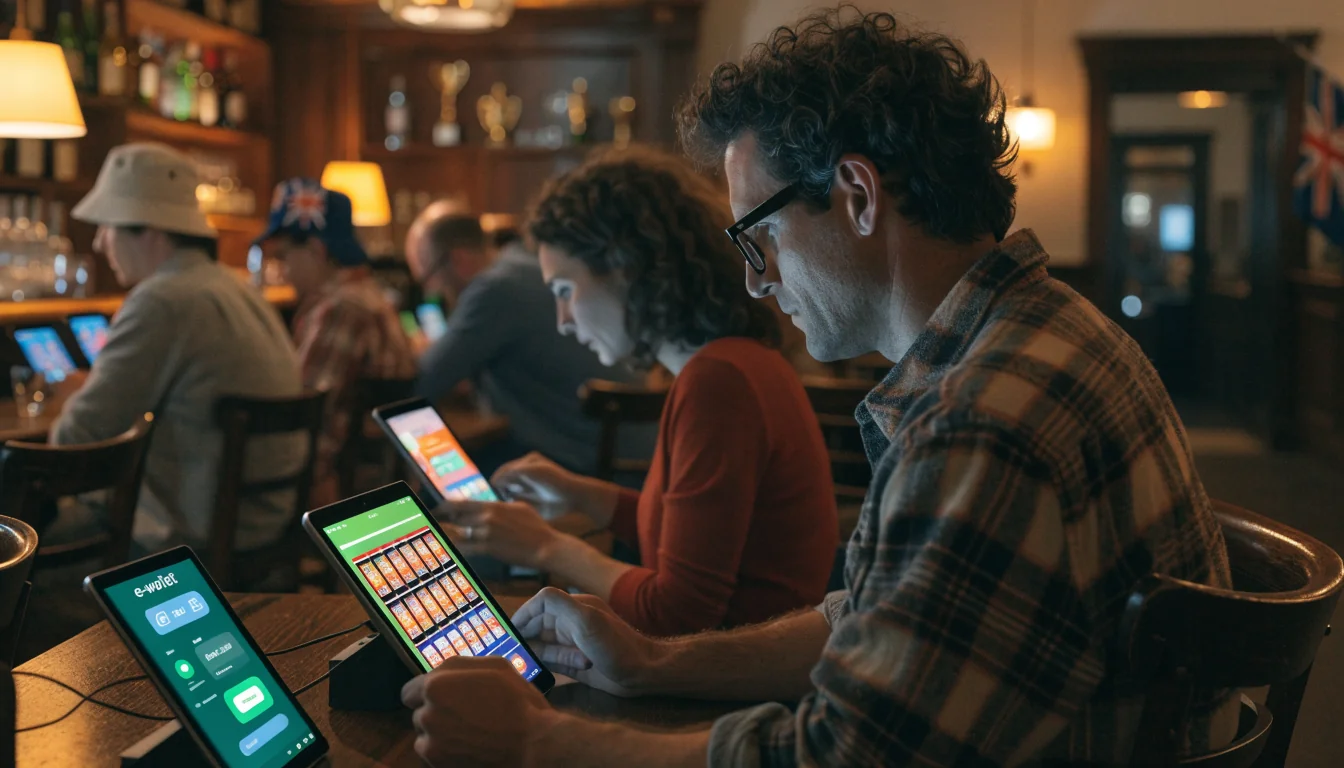
Pokies — the formal industry term is electronic gaming machines, or EGMs — sit in almost every pub and club across the country. Australia holds 3% of the world’s pub and club poker machines while accounting for only 0.3% of the global population, which tells you something about how embedded this form of gambling is in ordinary venues rather than confined to casino floors. New South Wales alone has approximately 95,800 of them, and NSW clubs earned $1.945 billion in net profit from pokies between December 2017 and May 2018. Those numbers exist for a structural reason: pokies are built to be profitable for the operator over the long run, and no amount of technique changes that mechanical fact. What technique can do is reduce the speed at which you feed that mechanism and help you play with a clearer picture of what you’re actually up against.
Start with the scale of the numbers
Australians bet almost AUD$150 billion on electronic gaming machines in the 2020‑2021 financial year, and lost AUD$12 billion of it. That works out to a per‑capita loss of AUD$608 for the same year — a figure that includes people who never touch a machine, which means the real average loss among active players is considerably higher. One industry estimate puts total pokies turnover at $191.2 billion across Australian gambling in 2023, though that figure comes from a single market report and should be read as one data point rather than an official benchmark. Regulatory reviews in New South Wales have also identified poker machines as the most harmful form of gambling in the state, ahead of other betting products.
Before you spin the reels chasing tips and tricks for 2026, it helps to know which pokies sites actually back up the hype with solid terms — here’s a quick rundown of what each one brings to the table.
License: Curacao · Bonus: 100% up to A$500 + 200 free spins, 10x wagering · Payout speed: crypto 30-60 minutes, fiat 1-5 days · Min. deposit: A$10 Wild Tokyo operates under a Curacao license and pairs its welcome bonus with fast crypto payouts, making it a reasonable pick if you want quick access to winnings and a low entry deposit.
Bonus: up to A$7,500 + 550 free spins across 10 deposits, 50x wagering · Payout speed: crypto under 1 hour, PayID 1-3 business days · Min. deposit: A$20 (A$30 to qualify for the bonus) Ricky Casino spreads a large bonus package across multiple deposits and offers near-instant crypto withdrawals, though PayID users should expect a short wait for cashouts.
License: Curacao eGaming OGL/2024/923/0383 (Antillephone N.V.) · Bonus: up to A$2,000 + 100 free spins across 2 deposits · Min. deposit: A$30 WinSpirit Casino holds a Curacao eGaming license via Antillephone N.V. and offers its bonus across two deposits, giving newcomers a bit more flexibility to unlock it.
License: Tobique Gaming Commission · Bonus: up to A$8,000 + 400 free spins across 4 deposits · Payout speed: crypto ~10-15 minutes, fiat 1-5 days · Min. deposit: A$30 SkyCrown is licensed by the Tobique Gaming Commission and stands out for very fast crypto payout times alongside a sizeable multi-deposit bonus.
License: Curacao · Bonus: up to A$10,000 multi-stage + 500 free spins · Min. deposit: A$20 (POLi) Lucky Dreams offers a substantial multi-stage bonus and accepts POLi deposits, catering to players who want a staged rewards structure.
License: Curacao eGaming (Hollycorn N.V., since 2017) · Bonus: 225% up to A$1,540 + 600 free spins across 4 deposits, 20x wagering · Min. deposit: A$20-30 (depends on the offer) Playfina Casino, licensed by Curacao eGaming under Hollycorn N.V. and running since 2017, offers a high-percentage bonus spread over several deposits with comparatively manageable wagering requirements.
License: Curacao Gaming Control Board OGL/2023/176/0095 (Hollycorn N.V.) · Bonus: up to A$5,000 + 300 free spins across 4 deposits Rollero Casino is licensed by the Curacao Gaming Control Board under Hollycorn N.V. and offers a generous bonus split across four deposits.
License: Curacao eGaming (Roby Games Ltd) · Bonus: 100% up to A$750 + 200 free spins Roby Casino is licensed through Curacao eGaming under Roby Games Ltd and offers a straightforward welcome bonus with free spins included.
Bonus: 100% up to A$750 + 200 free spins, 35x wagering · Payout speed: crypto 30-120 minutes, fiat 24-72 hours · Min. deposit: A$30 MrPacho combines a welcome bonus with relatively quick payout speeds for both crypto and fiat, giving players a reasonable turnaround on withdrawals.
License: Curacao eGaming OGL/2023/174/0082 (Dama N.V.) · Bonus: up to A$10,000 + 500 free spins across 4 deposits · Min. deposit: A$15 LevelUp Casino is licensed by Curacao eGaming under Dama N.V. and offers one of the larger bonus packages on this list along with a low minimum deposit requirement.
None of this is meant to discourage play — it’s context. A machine that returns a fixed share of turnover to players over millions of spins is not going to be beaten by a betting pattern, a lucky venue, or a time of day. What you can control is how much of your money passes through the machine, how long you sit in front of it, and how clearly you understand the mechanics before you start. Those three levers are the actual substance of "improving your chances" — not in the sense of beating the machine, but in the sense of getting more playing time and fewer surprises out of the money you bring.
Understand what "chances" actually means on a pokie
A pokie’s outcome on every spin comes from a random number generator that has no memory of the previous spin and no awareness of how much you’ve bet, how long you’ve played, or how much you’ve lost. This has practical consequences for how you should think about your session:
- A machine that hasn’t paid out in a while is not “due” — the RNG doesn’t track that.
- A machine that just paid a large win is not “hot” or more likely to pay again soon.
- Betting bigger to “chase” a loss doesn’t change the underlying probability of the next spin.
- Switching machines because one feels unlucky changes nothing except which cabinet you’re sitting at.
Reading this doesn’t cost you the ability to enjoy the game, but it does remove the false confidence that leads people to over-commit money based on a pattern that isn’t really there. Once you accept that each spin is independent, the practical question shifts from "how do I predict the next result" to "how do I structure my session so the inevitable losses don’t outpace what I intended to spend."
Set the budget before you sit down, not during
The single most reliable way to improve your outcome on any given session is deciding, in advance, exactly how much you’re willing to lose and treating that number as the end of the session, not a soft target. This sounds simple, and it is — but it works precisely because it removes the decision from a moment when you’re least equipped to make it rationally, which is after you’ve already lost some money and want to win it back.
A workable approach:
- Decide the amount you’re prepared to lose entirely, calculated as money you can afford to not have tomorrow.
- Split that amount into smaller session limits if you’re planning to play more than once.
- Stop when you hit the limit — win or lose — rather than letting a win convince you to keep going past it.
- Don’t top up from other funds once the session limit is reached.
The reason this matters more than any in-game technique is that per-capita loss figures like the AUD$608 recorded in FY 2020‑2021 aren’t the result of one catastrophic session per player — they accumulate from many sessions where the stopping point kept moving. A fixed budget set before play is the only lever that directly limits that accumulation.
Bet size and session length are connected
How much you bet per spin determines how many spins your bankroll can survive, which in turn determines how much playing time you get for your money. This is arithmetic, not strategy: a smaller bet per spin against the same budget produces more spins, and more spins mean more opportunities to hit a paying combination during the session, even though the long-run return to the machine doesn’t change.
If your goal is enjoying more time on the game rather than chasing a single large win, betting smaller and steadier stretches the same budget further. If your goal is a shot at a bigger single payout, betting larger reduces the number of spins you can afford but increases the size of any individual win relative to your stake. Neither approach beats the machine’s underlying mechanics — they just represent a trade-off between duration and variance, and knowing which one you’re optimising for before you start prevents the drift that happens when a small-bet session turns into large bets an hour in, without a conscious decision behind it.
Volatility Risk
Choosing a high‑volatility pokie can quickly burn through a fixed budget during dry spells, increasing the chance you exceed your session limit.
Volatility changes what a session feels like, not what it pays over time
Pokies vary in volatility — how often they pay small amounts versus how rarely they pay large ones. A low-volatility machine tends to return smaller wins more frequently, which can make a session feel steadier and extend playing time on a fixed budget. A high-volatility machine pays out less often but with larger individual wins when it does, which means longer stretches without a win punctuated by bigger spikes.
Neither type is "easier to win" in the sense of paying back more overall — volatility describes the shape of the outcomes, not the average outcome. What it does affect is how your session budget behaves in practice: a high-volatility game can burn through a session limit faster during a dry stretch, while a low-volatility game is more likely to let a fixed budget last the full time you planned. If you’re playing for entertainment across a longer session, that steadier distribution is generally more compatible with sticking to a budget than chasing a rare large payout.
Reading the machine before you play
Every pokie displays information that matters more than any superstition about "hot" or "cold" machines. Before committing money to a session, it’s worth checking:
- The paytable — what combinations pay, and how the jackpot or top prize is structured relative to smaller wins.
- The bet levels available — some machines allow a wide range of stake sizes, others are fixed or have a narrow band, which affects how finely you can control session length.
- Bonus or feature triggers — how a free spins round or bonus feature is activated, since this affects how volatility plays out during a session.
- Maximum bet requirements for bonus features — some machines require a higher stake to be eligible for certain bonus rounds, which changes the actual cost of chasing that feature.
This information is available on the machine itself or in its help screen, and reading it before playing is a more reliable use of time than watching other players or looking for patterns in a machine’s recent history, since past spins carry no information about future ones.
Dragon Link, 5 Dragons and other well-known titles: what actually differs between them
Multi-jackpot titles such as Dragon Link and 5 Dragons are amongst the most recognised pokies in Australian venues, and players often look for a specific edge in how they’re played. There isn’t one — no confirmed technique changes the underlying return of these games, and no verified data exists that lists specific RTP figures, jackpot structures, or provider-confirmed advantages for individual titles that can be responsibly repeated here. What’s consistent across any multi-jackpot format, regardless of the specific game, is that the mechanics described above — betting within your stated budget, understanding the paytable and bet-level requirements displayed on the machine, and treating each spin as independent of the last — apply exactly the same way whether you’re sitting at a Dragon Link cabinet or any other EGM. Where a machine’s help screen shows different jackpot tiers or bet requirements for feature access, that’s the specific detail worth reading before you sit down, rather than any pattern from previous play on that same cabinet.
Cashless and account-based play
Newer venues are progressively introducing account-based, sometimes called transparent, pokies systems, where play is tied to a registered account rather than cash inserted directly into the machine. From a player’s perspective, this format has a practical advantage for managing a session: an account-based system gives you a running, visible record of exactly how much you’ve put in and how much you’ve withdrawn, rather than relying on memory or a stack of cash sitting in a machine’s note acceptor. If you’re trying to hold to a session budget, a system that shows you the running total in real time removes the guesswork that makes it easy to lose track of spend during a long session.

Time-based limits work alongside money-based ones
A budget set in dollars answers "how much," but a limit set in minutes answers "how long," and the two aren’t interchangeable. Fatigue changes judgment — a session that runs long enough starts to erode the discipline that held the dollar budget in place at the start. Setting a time limit before you start, separate from the money limit, and treating both as hard stops rather than guidelines, catches the drift that a purely financial limit can miss, particularly during a session where wins and losses alternate enough to keep you engaged well past the point you intended to stop.
Tracking outcomes honestly
If you play more than occasionally, keeping an honest record of wins, losses, and time spent — even a simple note rather than anything formal — does something that memory alone doesn’t: it removes the selective recall that makes recent wins feel more significant than they were and recent losses easier to minimise. Given that the FY 2020‑2021 figures show an aggregate player loss of AUD$12 billion against AUD$150 billion wagered, the arithmetic reality for the average player across a long enough timeframe is a net loss — a record makes that visible to you directly rather than leaving it as an abstract statistic that applies to "other people."

What actually moves the needle
Put together, the practical levers available to a player are narrow but real:
| Lever | What it controls | What it doesn’t do |
|---|---|---|
| Session budget set in advance | Total possible loss for the session | Doesn’t change the odds of any spin |
| Bet size per spin | Number of spins the budget can sustain | Doesn’t make a win more likely |
| Time limit per session | Duration of exposure to the game | Doesn’t prevent losses within that time |
| Reading paytables and bet-level rules | Understanding of what a win actually pays and costs | Doesn’t reveal hidden patterns — there are none |
| Choosing volatility to match your goal | Shape of the session (steady vs. spiky) | Doesn’t change long-run return |
| Using account-based tracking where available | Visibility into real-time spend | Doesn’t stop you spending if you choose to keep going |
None of these turn pokies into a game with a positive expected return for the player — the scale of national turnover and loss figures makes clear that the machines are, in aggregate, built to return less than they take in. What these levers do is put the outcome of a single session more firmly under your control, rather than leaving it to be shaped by fatigue, misplaced confidence in a machine’s recent history, or a budget that quietly expanded partway through play. The difference between a session that feels manageable and one that doesn’t usually comes down to whether those decisions were made before the first spin or somewhere in the middle of the fortieth.
Common Pokies Tricks and How to Avoid Pitfalls
Most warnings about pokies focus on losing money through play. There’s a separate category of risk that has nothing to do with the reels or the return-to-player rate: pokies venues, because they handle large volumes of cash with limited traceability, are a recognised channel for money laundering. Public inquiries and sector guidance both flag pokies as a major AML risk area. Understanding how that works isn’t just background reading — it changes what you should expect from a legitimate venue and what should make you walk away from one.
Why pokies attract this kind of activity
A pokie takes cash in, holds it as credits, and pays a proportion back out — with no requirement that the person cashing out is the same person who put the money in, and no built-in record of why the money moved. That combination of high cash volume and weak traceability is exactly what makes an EGM useful to someone trying to disguise the origin of funds. It’s a mechanical fact about how the machine works, not a comment on any individual venue.
The typologies you should know about
Three patterns turn up repeatedly in AML casework and guidance around pokies. None of them require the machine itself to be tampered with — they exploit the cash-in, cash-out cycle around it.

Cash placement with minimal play. Someone inserts a large amount of cash into an EGM, plays little or nothing, and withdraws the balance shortly after. The machine hasn’t done anything unusual; the money has simply passed through it and come out the other side looking like gambling proceeds instead of whatever it was before.
Purchasing winning tickets. Instead of feeding cash through a machine directly, a person buys a winning ticket off someone who actually won it, at or near face value. The buyer now holds a ticket that reads as gambling winnings, with a paper trail pointing to a legitimate-looking source.
Structuring across venues. Rather than moving one large sum through one machine at one venue — which is more likely to attract attention — the same total amount is broken into smaller transactions spread across multiple pokies venues. No single transaction looks remarkable on its own.
All three rely on the same weakness: collusion and weak oversight at the point of cash-in or cash-out. Where staff aren’t verifying who’s playing, who’s cashing out, or why a pattern of redemptions doesn’t match ordinary play, these typologies go unnoticed.
Red flags a venue should be watching for
Operators with sufficient scale are expected to run customer due diligence and monitor patron behaviour for the following patterns. As a player, recognising them tells you what a properly run venue is actually looking for — and what it means if a venue clearly isn’t looking at all.
- Large cash insertions followed by minimal play and an almost immediate cash-out.
- Frequent small redemptions spread across different venues rather than one place.
- Multiple patrons appearing to coordinate, effectively moving cash between them through the machines.
- A customer refusing to provide identification, or using more than one player card.
- Redemption patterns for a given customer that sit well outside what’s normal for that venue.
- Access to more cash than would be expected for that customer’s profile, or a pattern of depositing higher values and larger amounts of cash than usual.
None of these on their own proves wrongdoing. What they share is that they’re all things a venue’s staff and systems are meant to notice and act on — and their absence of any noticing at all is itself a signal about how seriously that venue takes its obligations.
What controls should look like on the ground
The standard AML response to these typologies is customer verification and patron profiling: confirming who someone is, and building a picture of what normal play looks like for them so that abnormal patterns stand out. In practice this means identity checks at relevant thresholds, staff trained to recognise the red flags above, and internal reporting when something doesn’t add up.
This is also where the shift toward cashless and account-based pokies matters. A machine tied to a patron account rather than raw cash creates a record of who deposited what, when, and how it was played — which is precisely the traceability that cash-based machines lack. Industry material sometimes refers to this design as transparent pokies, reflecting the fact that the account layer makes the cash-in, cash-out cycle visible in a way a coin slot never was. None of this changes the odds of any given spin. It changes whether the movement of money around that spin can be reconstructed later.
What this means for you as a player
You’re not required to run an AML program, but a few habits keep you clear of behaviour that looks like the patterns above, and they keep you out of situations you didn’t intend to be part of.
Don’t accept offers to buy someone’s winning ticket. It might be framed as a favour or a quick discount, but purchasing a winning ticket from another patron is a known laundering typology, and being on either end of that transaction puts you inside a pattern that venues and regulators are specifically trained to spot.
Don’t let anyone else use your player card, and don’t use theirs. A card is meant to tie play to one identity. Sharing cards, or playing on multiple cards to keep transactions looking small, mirrors the structuring and multiple-card red flags directly.
Expect identification requests and treat them as normal. If a venue asks for ID at a cash-out threshold, that’s the customer verification control doing its job, not an inconvenience aimed at you personally. A venue that never asks, regardless of how much cash moves through a session, isn’t necessarily doing you a favour by skipping the friction — it may simply not be running the checks it’s supposed to.

Be wary of venues where large cash transactions draw no attention at all. If a pattern of heavy cash-in with almost no play, or rapid cash-out right after a large deposit, seems to raise no questions from staff, that’s not a sign of an easygoing venue — it’s a sign of exactly the gap that the typologies above are built to exploit.
Misconceptions worth retiring
Separate from the AML angle, a few beliefs about pokies persist because they sound like insider knowledge rather than because they hold up.
"A machine is due for a win because it hasn’t paid out in a while." Nothing about a machine’s recent history changes what the next spin does. Treating a quiet machine as overdue is a belief about pattern, not a fact about mechanism.
"Moving between machines after a loss changes your odds." Switching seats doesn’t alter how any individual machine behaves. It might change your experience of a session, but it isn’t a technique that shifts outcomes.
"Cash play is safer than card or account-based play because it’s more private." The opposite is closer to the operational reality: cash is exactly what makes pokies attractive for laundering in the first place, precisely because it’s harder to trace. Account-based and cashless systems exist to close that gap, not to reduce your privacy for its own sake.

"A venue that lets you cash out a large sum with no questions is being customer-friendly." It’s the reverse of friendly — it’s a venue skipping the verification step that’s meant to protect the integrity of the system you’re playing in, and by extension, the people using it legitimately.
A short checklist before you sit down
| Situation | What it usually means |
|---|---|
| Staff ask for ID before a large cash-out | Standard customer verification, not a red flag against you |
| Another patron offers to sell you a winning ticket | A known laundering typology — decline it |
| You’re asked to use someone else’s player card, or to hold multiple cards | Mirrors structuring and multi-card red flags — don’t do it |
| A venue processes large cash sums with no checks at all | A weak-oversight venue, not a convenient one |
| The machine is cashless or account-based | Better traceability of your own transactions, not a change to the odds |
None of this changes how the game itself pays out, and it isn’t a substitute for the return-to-player mechanics covered earlier. It’s a separate layer — the cash and identity handling around the machine — that’s worth understanding on its own terms, because it’s the layer where most of the actual risk to an ordinary player sits, and where the difference between a well-run venue and a poorly run one is easiest to see if you know what to look for.
Prepared by the Pokies Live Guide editorial staff.