
Casino Dice Games in Australia: 2026 Guide

- Online casino dice games in Australia – legal landscape
- Varieties of dice games you can find in Australian casinos
- How to play casino dice games online – step‑by‑step guide
- Casino dice games overview for the 2026 Australian market
- Craps and other dice‑table games – what to expect
- Dice‑based casino games with multiple dice
- What casino games use dice and why they matter
- Core rules that govern casino dice games
- Live dice games in Australian venues
- Where you actually roll the dice – casino floors and dedicated rooms
Online casino dice games in Australia – legal landscape
Rolling dice for real money online sits inside a legal structure that most players never read before they deposit. Understanding it matters more for dice games than for almost any other casino product, because the answer to "is this legal" depends on where the dice game runs, not on the dice themselves.
The law that decides the question
The primary piece of legislation is the Interactive Gambling Act 2001 (IGA), a Commonwealth law built around harm minimisation rather than around banning gambling outright. Some sources cite an Interactive Gambling Act 1997 as the statute prohibiting online casino games for Australian residents — that date conflicts with the 2001 Act referenced elsewhere, and this article won’t pretend the discrepancy doesn’t exist. What both versions agree on is the substance: online casino-style games are prohibited for Australian residents, and that prohibition covers dice-based casino games played for real money exactly as it covers slots, roulette, poker and blackjack.
The IGA doesn’t distinguish between a game of pure chance played with two dice and a multi-reel pokie. Any casino-style product offered online to someone physically in Australia falls under the same restriction, regardless of whether the game involves cards, reels, a wheel, or dice.
Before you try your luck at dice-based casino games in 2026, it’s worth checking how a site handles licensing, deposits and payouts, since those details shape your actual experience once you start playing.
License: Curacao · Bonus: 100% up to A$500 + 200 free spins, 10x wagering · Payout speed: crypto 30-60 minutes, fiat 1-5 days · Min. deposit: A$10 Operating under a Curacao license, this site pairs a matched deposit with free spins and a 10x wagering requirement, while offering fast crypto payouts and a low minimum deposit of A$10.
Bonus: up to A$7,500 + 550 free spins across 10 deposits, 50x wagering · Payout speed: crypto under 1 hour, PayID 1-3 business days · Min. deposit: A$20 (A$30 to qualify for the bonus) This operator offers an extensive multi-deposit bonus package with free spins spread across ten deposits, backed by quick crypto withdrawals and PayID processing within a few business days.
License: Curacao eGaming OGL/2024/923/0383 (Antillephone N.V.) · Bonus: up to A$2,000 + 100 free spins across 2 deposits · Min. deposit: A$30 Licensed under Curacao eGaming via Antillephone N.V., this site offers a two-deposit bonus with free spins and a modest minimum deposit requirement.
License: Tobique Gaming Commission · Bonus: up to A$8,000 + 400 free spins across 4 deposits · Payout speed: crypto ~10-15 minutes, fiat 1-5 days · Min. deposit: A$30 Licensed by the Tobique Gaming Commission, this operator provides a sizeable multi-deposit bonus with free spins, alongside notably fast crypto payout times.
License: Curacao · Bonus: up to A$10,000 multi-stage + 500 free spins · Min. deposit: A$20 (POLi) Under a Curacao license, this site features a large multi-stage bonus with free spins and accepts POLi deposits starting at A$20.
License: Curacao eGaming (Hollycorn N.V., since 2017) · Bonus: 225% up to A$1,540 + 600 free spins across 4 deposits, 20x wagering · Min. deposit: A$20-30 (depends on the offer) Licensed by Curacao eGaming through Hollycorn N.V. and established in 2017, this operator offers a high-percentage bonus spread across four deposits with a 20x wagering requirement.
License: Curacao Gaming Control Board OGL/2023/176/0095 (Hollycorn N.V.) · Bonus: up to A$5,000 + 300 free spins across 4 deposits Licensed under the Curacao Gaming Control Board via Hollycorn N.V., this site offers a substantial four-deposit bonus package including free spins.
License: Curacao eGaming (Roby Games Ltd) · Bonus: 100% up to A$750 + 200 free spins Licensed through Curacao eGaming under Roby Games Ltd, this operator provides a straightforward matched deposit bonus with free spins.
Bonus: 100% up to A$750 + 200 free spins, 35x wagering · Payout speed: crypto 30-120 minutes, fiat 24-72 hours · Min. deposit: A$30 This site combines a matched deposit bonus with a 35x wagering requirement and offers relatively quick crypto and fiat payout windows.
License: Curacao eGaming OGL/2023/174/0082 (Dama N.V.) · Bonus: up to A$10,000 + 500 free spins across 4 deposits · Min. deposit: A$15 Licensed under Curacao eGaming through Dama N.V., this operator offers one of the larger four-deposit bonus packages along with a low minimum deposit of A$15.
What’s actually banned, and who it’s banned for
This is where most explanations lose precision, so it’s worth stating plainly:
- Online casino games — including dice games, slots, blackjack, roulette and poker — are prohibited under the Interactive Gambling Act 2001.
- Online poker and in-play (live) betting are also prohibited at the federal level under the same Act.
- The law targets the operator, not the player. It is not illegal for an individual in Australia to play at an offshore-licensed online casino that offers dice games.
- No domestic licence exists for real-money online casino operation. It’s not that the licensing process is strict or slow — it’s that no such licence is available to apply for.
- Offering online casino gambling to Australian residents is illegal for the operator regardless of where that operator is based, but Australian authorities have practical reach only over entities operating from within Australia.
For a player, the consequence is straightforward: playing a dice game at an offshore site doesn’t expose you to legal risk. What it does mean is that no Australian regulator stands behind the platform, and no domestic licence guarantees the game is fair, the payout is honoured, or the operator will still exist next year.
Why there’s no domestic online dice game to point to
Australia doesn’t run a single, centralised gambling framework. There is no one statute and no one authority covering every form of gambling in the country — regulation splits between federal law and eight separate state and territory regimes. That split explains why "is online casino gambling legal in Australia" doesn’t have a one-line answer: federal law under the IGA blocks online casino-style games nationally, while states and territories handle licensing for other gambling categories, such as wagering and lotteries, independently of each other.
The federal regulator responsible for enforcing the IGA is the Australian Communications and Media Authority (ACMA). ACMA doesn’t license casino operators — it has no power to, since no domestic online casino licence exists — but it is the body tasked with acting against services that break the IGA by offering prohibited products, dice games included, to people in Australia.
Operator location risk
Be aware that any online dice casino targeting Australian players operates from offshore jurisdictions, meaning Australian regulators cannot enforce consumer protections or resolve disputes.
A separate wrinkle worth knowing: the Northern Territory Racing Commission (NTRC) functions as Australia’s de-facto online gambling regulator for a different reason entirely. It licenses most of the country’s national online bookmakers, largely because operators based in the Northern Territory benefit from a lower tax rate there. This matters for context, not for dice games directly — the NTRC’s role covers online wagering operators, not online casino-style products like dice games, which remain outside any legal domestic licensing path altogether.
What this means in practice for a dice game specifically
Put the pieces together and the picture for online dice gambling in Australia looks like this:
- No Australian regulator issues a licence for an online casino dice game, because no domestic online casino licence exists at all.
- Any site offering dice games for real money to Australian players is, by definition, operating from outside Australia and outside the reach of the IGA’s licensing regime.
- Playing such a game is not an offence for the person placing the bet.
- Advertising or operating that same dice game from within Australia, or targeting Australian residents commercially, is what the law actually penalises.
This is why claims like "licensed Australian online dice casino" or "check the operator’s local licence" don’t hold up under scrutiny — there is no local licence category to check against, and no register of approved online casino operators to consult. Any statement suggesting otherwise misrepresents how the law is structured, not just a minor detail of it.
Where enforcement actually lands
Because ACMA’s jurisdiction is federal and the operators in question are typically offshore, enforcement against a specific dice-game site tends to focus on blocking access or pursuing the operator’s principals rather than pursuing individual players. The regulatory tension is structural: federal law prohibits the product, state and territory bodies handle licensing for other gambling verticals entirely, and the actual dice game a player encounters online almost always originates from a jurisdiction with its own separate licensing authority — not an Australian one.
For anyone weighing up an online dice game against this backdrop, the legal landscape doesn’t offer a stamp of domestic approval to look for. It offers a clear rule about who bears legal responsibility (the operator), a clear gap in domestic licensing (none exists), and a fragmented regulatory map where no single office in Australia can vouch for an offshore dice game the way a state regulator can vouch for a licensed bookmaker or a lottery operator.

Varieties of dice games you can find in Australian casinos
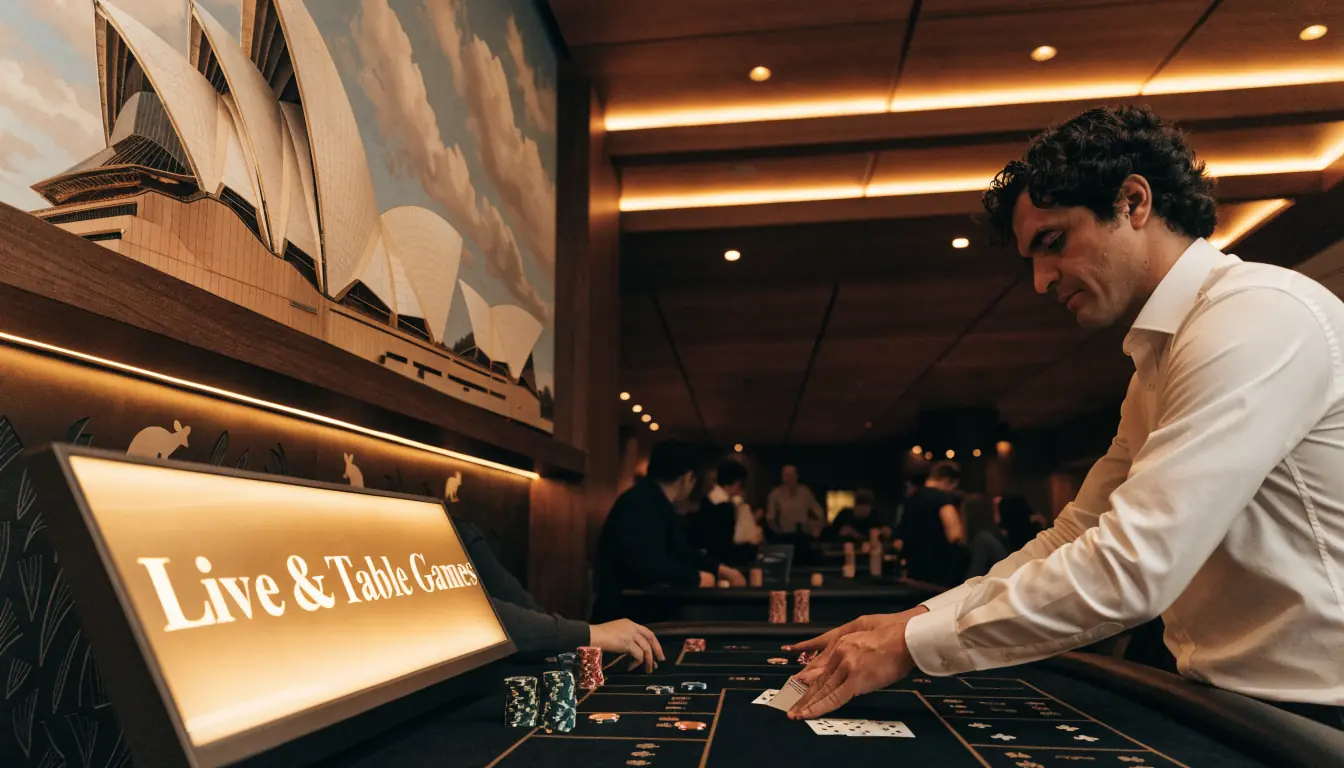
Walk onto the floor of any licensed Australian casino and the dice offering usually sits within a broader table-games pit, next to blackjack and roulette rather than in a section of its own. What you find there depends on the venue, but the underlying mechanics repeat across the country because the equipment and table layouts are standardised by the same suppliers that serve casinos internationally.
Craps as the anchor game
Craps is the game most Australians picture when they think of casino dice, and it’s the one land-based venues build their dice pit around. It uses a long table with raised walls the dice bounce off, a marked layout for bets, and a rotating shooter who throws two dice per round. The game’s defining feature is the range of bets available on a single roll — some tied to the shooter making a point, others resolved on the very next throw. Because it draws a crowd and takes floor space, craps tends to appear at larger casino properties rather than smaller regional venues.
Sic Bo — the three-dice alternative
Sic Bo is less visible than craps but present in casinos that cater to a broader Asian-influenced table games market, which is common in several Australian cities. It uses three dice shaken in a covered cage rather than thrown by hand, and betting is done on combinations — specific totals, whether the dice will show odd or even numbers, or particular pairs and triples. The table layout is a printed grid rather than the pocketed rail of a craps table, and there’s no shooter: the outcome comes from the dealer operating the cage, not from a player’s throw.
The classic two‑dice table game, usually found in larger Australian casinos, with a full range of point‑based bets.
A three‑dice cage game popular in venues with an Asian‑focused table‑games offering.
A simpler three‑dice side game where the dealer spins a wire cage and players bet on single numbers.
Chuck-a-Luck and cage-based variants
Chuck-a-Luck is a simpler cousin of Sic Bo, sometimes found as a side game rather than a dedicated table. Three dice sit in a wire cage attached to a handle; the dealer spins it, and players bet on which numbers will appear rather than on totals or combinations. It’s a smaller-footprint game, which is why some venues run it alongside other attractions rather than as a standalone pit.
Simplified single- and double-dice formats
Not every dice game on an Australian casino floor needs a full table crew. Some venues run simplified formats — a single die or a pair, with a short list of bet types — as a lower-intensity option compared to the full craps layout. These formats vary more by property than the established games above, since they aren’t built around a single standardised rule set the way craps and Sic Bo are.
Why the lineup differs from venue to venue
| Game | Dice used | How outcome is generated | Typical table setup |
|---|---|---|---|
| Craps | Two, thrown by a player (shooter) | Player throw against a marked layout | Long rail table with bounce walls |
| Sic Bo | Three, shaken by the dealer | Dealer-operated cage | Flat printed betting grid |
| Chuck-a-Luck | Three, spun by the dealer | Dealer-operated wire cage | Compact side-game setup |
| Simplified dice formats | One or two | Varies by venue | Smaller table or side layout |
Which of these you’ll actually find depends on where you are. Land-based casinos in Australia are regulated by state government regulators and law enforcement agencies rather than by a single national body, and each state and territory runs its own separate gambling regulator. That structure means individual venues answer to their own jurisdiction’s rules on table games, floor layout and licensing conditions, which is part of why a dice pit in one state can look noticeably different — larger, smaller, or built around a different mix of games — from one in another. The Victorian Gambling and Casino Control Commission, for instance, monitors wagering service providers for compliance with the National Consumer Protection Framework, but its remit sits within Victoria; it doesn’t dictate what a casino in another state puts on its floor.
It’s worth being precise about what this state-by-state regulation actually covers. It governs the physical casino you can walk into — its licence, its table games, its floor operations. It has nothing to do with dice games offered through websites. Regulators like Liquor & Gaming NSW and the VGCCC have limited power over offshore online casinos, because those platforms operate outside their state’s jurisdiction entirely. So if you’re comparing what’s on a casino floor in Sydney against what a gambling site claims to offer online, you’re not comparing two versions of the same regulatory system — you’re comparing a state-licensed physical venue against something no state or territory regulator actually oversees.
State regulator differences
Each Australian state and territory runs its own gambling regulator, so the licensing conditions for land‑based dice tables can vary noticeably between Sydney, Melbourne and Perth.
For a player standing in front of a table, the practical difference between these games comes down to pace and involvement. Craps rewards understanding a fairly long list of bet types and gives you an active role as shooter when it’s your turn. Sic Bo and Chuck-a-Luck are faster to learn because the dealer generates the outcome and your job is limited to picking a bet before the cage is shaken. Neither is objectively simpler in terms of odds — the difference is in how much of the game you’re expected to run yourself versus watch unfold.
How to play casino dice games online – step‑by‑step guide
No Australian regulator licenses a domestic site to offer dice games for real money, so every platform you find operates from overseas under a foreign licence. The Interactive Gambling Act 2001 puts the legal weight on the operator, not on you — playing at an offshore-licensed casino is not an offence for an individual in Australia. That distinction shapes every step below: you’re dealing with a business that answers to a regulator on the other side of the world, not one that ACMA oversees directly.
1. Pick a platform and read the licence footer
Before anything else, check who actually licenses the site — this information sits in the footer, not in marketing copy on the homepage. The licence tells you which regulator you’d need to contact if something goes wrong, since ACMA can block the site’s access in Australia but has no power to settle a dispute with the operator itself.
2. Register an account
Registration asks for the basics: name, date of birth, email, and a residential address. Because the minimum gambling age in Australia is 18, expect the form to reject a birth date that doesn’t clear that threshold outright, before you get anywhere near a dice table.


3. Verify your identity
Identity verification usually happens in two stages. Some platforms ask for a copy of government-issued ID right at sign-up; others wait until your first withdrawal request. Either way, you should expect to submit ID at some point before any money leaves the platform — this is standard anti-money-laundering practice, not a delay tactic specific to one operator.
4. Fund the account
You deposit through the payment methods the site lists on its cashier page. What you use to fund the account determines how withdrawals are processed later, so it’s worth checking the cashier options before you commit to a deposit method rather than after.
5. Find the dice game
Dice titles sit in a distinct category in most lobbies, separate from pokies and table games, though some sites file craps and sic bo under "table games" instead. Use the site’s search bar if the category structure isn’t obvious — typing "dice" is faster than clicking through menus.
6. Set a limit before you place a bet
Reputable operators let you set deposit, loss, or session limits from the account settings before you start playing. Doing this before your first bet — not after a losing session — is the point: a limit set in advance is a boundary, one set afterward is just a note to yourself.
7. Place your bet and read the payout table
Every dice game displays a payout table or rules panel, usually accessible via an "i" icon on the game screen. This tells you what each bet type pays and what the house edge is on that specific bet — dice games bundle several bet types with different house edges into one table, so the payout structure is worth reading before, not after, you commit chips to a particular square.
Example: 5 × $10 = $50 payout for a winning bet on a 5 to 1 odds bet.
8. Withdraw
Withdrawals go through the same identity checks mentioned above. If you haven’t verified your ID during registration, expect the platform to request it now, before releasing funds — this step is non-negotiable across every legitimately operating site, regardless of jurisdiction.
Nothing here differs fundamentally from how you’d approach any other regulated financial account: verify who you’re dealing with, confirm your own identity, set your boundaries in advance, and understand what you’re being paid before you bet.
Casino dice games overview for the 2026 Australian market
Nothing structural changes the casino dice game landscape in Australia heading into 2026. The split that has defined the market for years stays exactly where it is: land-based dice games sit under state gambling regulators and law enforcement agencies, while real-money online dice games remain outside any domestic licensing system entirely. There is no local body that hands out a licence for an operator to run online casino dice games for Australian residents, and nothing on the horizon suggests that changes in the coming year.


This matters because it defines what "dice casino game" actually means depending on where you’re standing. Walk onto the floor of a licensed venue in Sydney, Melbourne, or Perth, and craps or sic bo sit under the same state-based oversight as every other table game in the building — inspected, licensed, and answerable to a regulator you can name. Open a browser and search for the same games online, and you’re in a different territory altogether: one where no Australian regulator issues licences, monitors fairness, or holds an operator accountable to local law.
What stays constant in 2026
- No domestic online licence exists. No state or territory regulator, and no federal body, issues real-money online casino licences to operators serving Australian players. This isn’t a gap expected to close in 2026 — it’s the standing structure of the market.
- Land-based dice tables remain a separate system. Physical casinos offering craps or sic bo answer to state government regulators and law enforcement, not to whatever framework governs (or fails to govern) an offshore website.
- Offshore providers fill the online space by default, not by permission. Any operator offering online dice games to Australian players in 2026 is doing so from outside the country, licensed elsewhere — not because Australian law endorses this, but because Australian law simply doesn’t licence anyone to do it domestically.
Why the offshore role isn’t going anywhere
The absence of a domestic online licensing pathway isn’t a temporary oversight waiting on legislation — it reflects a settled position. Operators wanting to offer online casino dice games to Australians have never had a legal route to a local licence, and 2026 doesn’t introduce one. That leaves offshore-licensed platforms as the only source of online dice games for players in this market, a structural fact rather than a market trend that might reverse.
This is worth sitting with before assuming the online dice segment in Australia will look, function, or be governed the way the land-based segment does. A land-based dice table in a state-licensed casino operates inside a chain of accountability you can trace: venue, state regulator, law enforcement. An online dice game offered to an Australian player in 2026 sits outside that chain entirely, governed instead by whatever jurisdiction licensed the offshore operator — a separate legal environment covered elsewhere in this guide.
No domestic licence
Playing at an offshore online dice casino does not expose you to legal risk, but it also means there is no Australian licence protecting your funds or guaranteeing fair play.
What this means going into 2026
For anyone trying to size up the dice game segment for the year ahead, the honest overview is short: the online side isn’t a growing domestic industry, it’s an offshore-supplied space operating in the absence of local licensing, and the land-based side continues on a completely separate regulatory track that has nothing to do with how online dice games are governed. Expecting a 2026 shift toward locally licensed online dice games misreads the structure — nothing in the current framework points toward that outcome, and no announced changes suggest one is coming.
Craps and other dice‑table games – what to expect
Craps runs on a layout that looks intimidating the first time you see it: a long, curved table marked with dozens of betting boxes, staffed by two or more dealers and a "stickman" who moves the dice with a wooden stick. Underneath the visual clutter, the game is built on a single mechanic — a shooter rolls two dice, and everyone at the table bets on the outcome of that roll or a sequence of rolls that follows it.


The core cycle is called a "come‑out roll." The shooter throws the dice; a 7 or 11 wins for anyone betting on the "Pass Line," while a 2, 3 or 12 loses. Any other number becomes "the point," and the shooter keeps rolling until that same number comes up again (a pass) or a 7 appears first (a miss). Everything else at the table — the proposition bets, the odds bets, the "Don’t Pass" side — is a variation built around that one cycle.
Table layout and betting options
A craps table is split into mirrored betting areas on either side of the dealers, so players standing at either end have the same options in front of them. The main categories are:
- Line bets — Pass Line and Don’t Pass, the two largest sections on the felt, resolved by the come‑out roll and the point.
- Come and Don’t Come bets — the same logic as line bets, but placed after the point is already established.
- Odds bets — additional wagers placed once a point is set, tied directly to the true probability of that number appearing before a 7.
- Place and buy bets — wagers on a specific number repeating before a 7, without needing a full come‑out cycle.
- Proposition bets — one‑roll wagers on the centre of the table, covering specific combinations such as any 7 or any craps.
Land‑based Australian casinos run this layout under state gambling regulators and law enforcement agencies, not under the federal Interactive Gambling Act 2001 framework that governs online gambling. That split matters for what you can expect walking onto a casino floor: the table rules, dealer conduct and betting limits at a physical craps table are set and policed at the state level, separately from anything to do with internet-based wagering.
How craps differs from other dice games on the floor
Most other dice‑based products in a casino are single‑roll or short‑sequence games — a shooter throws once, or a small set of dice determines an immediate winner, with no ongoing point to track. Craps is built around a longer arc: a shooter can hold the dice through many rolls before the round ends, and the bets available shift depending on whether a point is active. This is also why craps needs a dedicated table with a stickman and boxman managing the dice and the layout, while simpler dice games can run on a smaller table or a single dealer station.
How to play a basic Craps round
Put your chips on the Pass Line before the shooter’s come‑out roll.
If the dice show 7 or 11 you win instantly; 2, 3 or 12 result in an immediate loss.
Any other number becomes the point. Keep betting until the point or a 7 is rolled again.
Because the game depends on a live shooter physically throwing dice down a table with backboards, it sits firmly on the land‑based side of the industry. There is no domestically licensed way to offer this or any other casino game online in Australia — it is illegal to operate an online casino here, and no local licence for that purpose exists. Any version of craps advertised as playable "online" through an Australian‑facing site is not running under Australian law; it depends entirely on an offshore licence, a separate legal question from what applies inside a physical casino.
If you’re heading to a table for the first time, expect the pace to be dictated by the stickman calling numbers and the dealers settling bets between rolls — it moves faster than it looks from the outside, and most of learning it comes from watching a few rounds before placing money on the layout.
Dice‑based casino games with multiple dice
A casino game with two dice works on a simple mechanical principle: two independent six-sided dice, each landing on a value from one to six, produce a combined result between two and twelve. Because each die is independent, the combinations are not evenly distributed. A total of seven can be made six different ways, while a total of two or twelve can only be made one way each. This is the mathematical backbone behind craps, sic bo’s simpler bets, and most two-dice side games found in Australian casinos — the payout structure exists because some totals are rarer than others, and rarer totals pay more.
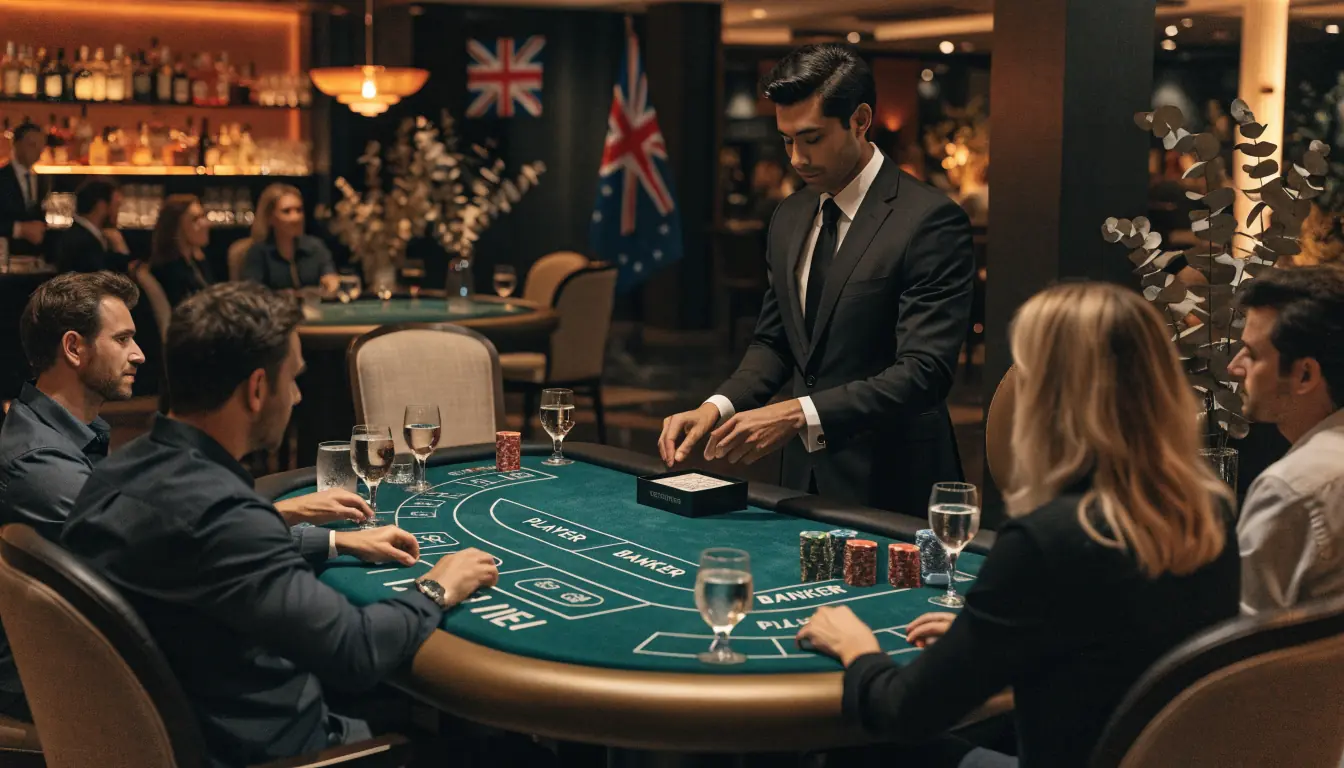

A casino game with three dice changes the shape of the odds again. Sic bo is the clearest example: three dice are rolled together, usually inside a shaker or dome rather than thrown by hand, and players bet on the total, on specific combinations, or on whether particular numbers appear at all. Adding a third die widens the range of possible totals to between three and eighteen, and it multiplies the number of ways a mid-range total can occur compared with the extremes. That is why bets sitting near the middle of the range carry shorter odds and smaller payouts, while bets on the extreme totals or exact triple combinations carry longer odds and larger payouts.
The house edge on these games is built directly into how the payout table compares with the true probability of each outcome. A bet that pays out at odds shorter than its actual chance of winning is where the house edge sits — the gap between what the dice mathematically produce and what the table pays. This gap differs from bet to bet within the same game, which is why two wagers on the same sic bo table can carry noticeably different house edges even though they use identical dice.
house edge
The built‑in advantage the casino retains on a bet, calculated as the difference between the true probability of an outcome and the payout offered to the player.
Multiple-dice games differ from single-die formats mainly in variance: more dice in play means more possible outcomes, which spreads probability across a wider range of totals rather than concentrating it. Players who move between craps, sic bo, and other multi-dice formats are working with the same underlying random number games logic, just distributed across a different number of dice and a different payout table.
What casino games use dice and why they matter
A casino dice game is any game whose outcome comes from a random roll rather than a shuffled deck, a spinning reel, or a wheel. That distinction matters more than it sounds. Dice belong to a separate mechanical family from cards and reels: the physical roll produces a discrete outcome from a fixed, countable set of possibilities, which is what makes dice games easy to explain and easy to verify against, whether you’re watching a table in person or checking a random number generator’s logic online.
Within a casino’s product range, dice games sit alongside three other core categories: card games, wheel-based games, and reel-based games (pokies). Each relies on a different physical or digital mechanism to generate randomness:
- Dice games – outcome determined by one or more rolled dice (craps, sic bo, and other dice-table formats).
- Card games – outcome determined by dealt or drawn cards (blackjack, baccarat, poker variants).
- Wheel games – outcome determined by a spinning wheel with fixed segments (roulette, wheel-of-fortune style games).
- Reel games – outcome determined by a random number generator simulating spinning reels (pokies).
Dice games matter within this portfolio because they offer some of the clearest odds structures a player can reason through. Since a die has a fixed number of faces, you can work out probabilities directly, without needing to know an RNG’s internal seed or a reel’s weighting. That transparency is part of why craps and similar formats have kept a stable following in land-based venues for generations.
For Australian players specifically, the practical relevance of this category is narrower than the game variety suggests. There are no domestically licensed real-money online casino operators available to Australian players, which means the online side of this product family — RNG-based dice games offered through digital platforms — sits outside any local licensing structure altogether. Land-based dice tables, by contrast, exist within a completely different regulatory track, covered separately under state-based casino licensing rather than the framework that applies to online products.
Understanding where dice games sit in the broader casino portfolio is useful mainly for setting expectations: what you find on a physical casino floor and what you might encounter through an online platform are governed by different rules, different oversight bodies, and, in the online case, no domestic licence at all.
Core rules that govern casino dice games
Casino dice game rules split into two separate systems in Australia, and the split has nothing to do with the dice themselves — it comes from who regulates the venue.
Split regulatory landscape
Online dice games lack a domestic licence, while land‑based tables are governed by state regulators.
Land-based casinos fall under state government regulators and law enforcement agencies. Each jurisdiction sets its own conditions for how a physical dice table operates: who can deal, how bets are placed and settled, and how disputes on the floor get handled. These rules apply to the casino building itself and to the croupier running the game, not to anything happening online.
Online dice games sit outside that structure entirely. There’s no domestic licence covering them, so no Australian regulator writes rulebooks for how an offshore dice game must be built, tested or paid out. Any "rules" you read on an offshore site are the operator’s own terms, not a standard enforced locally.
That difference matters for what you can actually rely on:
- On a casino floor — the rules governing bet types, table limits and payout odds are set and enforced by the state regulator, with a licensed venue accountable to that authority.
- Online — the rules come from the offshore operator alone. There’s no local body checking that the stated odds match what the dice mechanism actually produces.
What stays constant either way is the basic logic of the game: a roll produces a result, that result is compared against a fixed set of possible outcomes, and bets are settled according to which outcome landed. The mechanism generating the roll — physical dice on a table, or a random number generator online — is what separates the two systems, and it’s covered in the sections on live and online play.
No single national rulebook ties these two environments together. Land-based rules stop at the casino door; nothing has replaced them online.
Live dice games in Australian venues
A live dice game means a croupier physically rolls the dice at a table and you place your bet in person, watching the result happen in front of you. This is distinct from a random number generator producing a digital roll on a screen — nothing here is simulated.
The distinction matters legally because of how the Interactive Gambling Act 2001 treats live betting differently depending on the channel. In-play betting placed online — through a website or app while a game is in progress — is illegal in Australia. That prohibition targets the online delivery method, not the act of betting while a game is live. Placing a live bet by phone remains legal, and so does placing one at a physical table inside a licensed venue, since neither involves an online interactive service.

So when you roll dice at a table in a bricks-and-mortar casino, you’re operating entirely outside the scope of the federal restriction on in-play online betting. The rules that apply are the venue’s own table rules and the state gambling regulator’s oversight of that physical location — not the IGA provisions written for internet-based operators.
Where you actually roll the dice – casino floors and dedicated rooms
Walk into any licensed Australian casino and the game where you throw dice against a marked table sits on the main gaming floor, usually near other table games rather than tucked away with the pokies. Craps tables take up more physical space than blackjack or roulette, so venues tend to place them where there’s room for a crowd — a game where players roll dice draws spectators who bet alongside the shooter, and the layout accounts for that.
Larger venues sometimes separate table games into their own section, distinct from the electronic gaming area. That’s not a dice-specific rule; it reflects how state government regulators oversee land-based floor operations, which run under different oversight to the federal rules governing anything played online. Some casinos also run high-limit rooms, where dice tables sit apart from the general floor for players wagering larger amounts, with dedicated staff and a quieter setting.
None of this floor layout has a parallel online. A physical table needs a croupier, a marked surface and space for other players to bet on the outcome — none of which exists in a browser window, which is one reason dice games occupy a small, distinct footprint inside Australian casino venues rather than spreading across the whole floor.