
Best Pokies in Perth: Machines, Odds, and Online Options
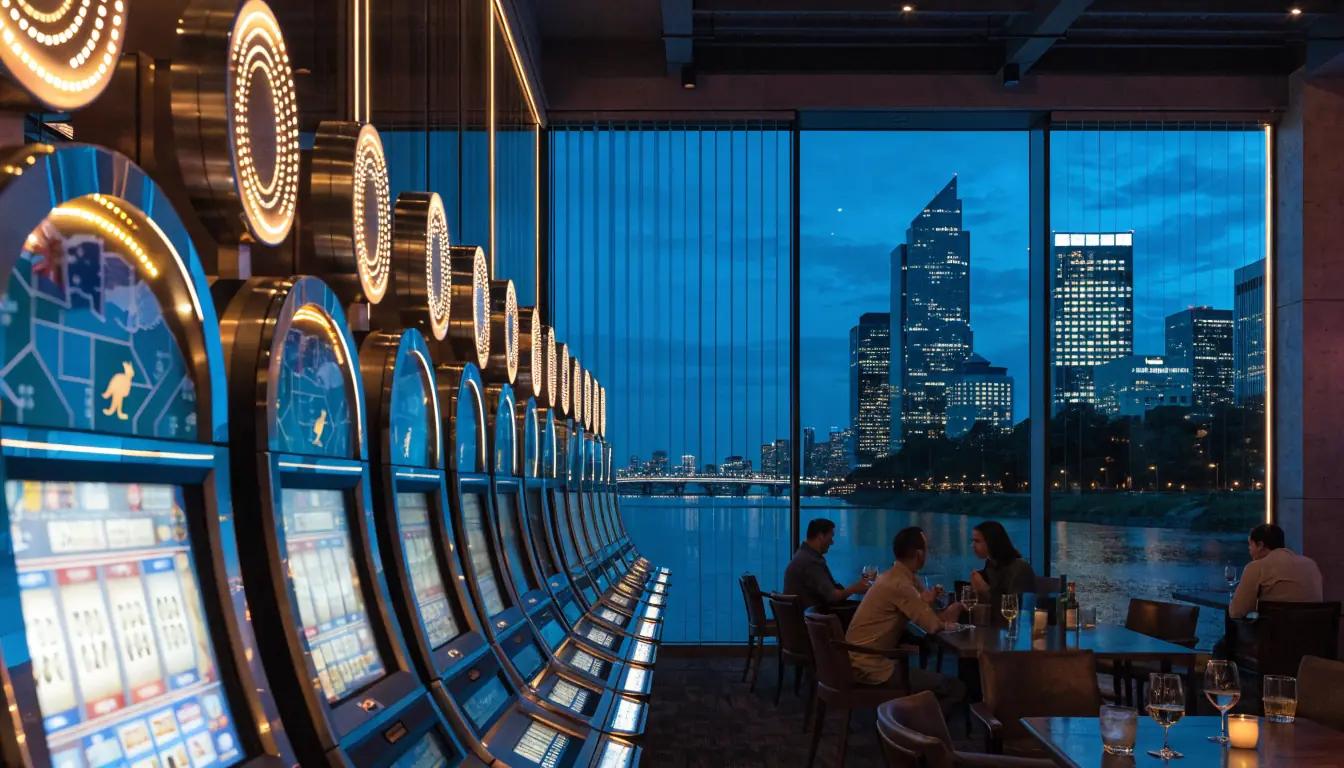
Understanding Pokies in Perth: Types, Features, and What to Look For
Anyone searching for pokies in Perth runs into a split almost immediately: a small number of physical machines in one location, and a much larger world of online pokies that operate under a different set of rules entirely. Before comparing venues or bonuses, it helps to understand what a pokie actually is as a machine, how it decides what it pays back, and why the same word — "pokie" — covers two products that behave quite differently underneath.
This section works through the mechanics: how a random number generator produces outcomes, what RTP and volatility actually measure, what bonus buy features do to the math of a game, and how to read a game’s specification sheet before you commit any money to it. None of this depends on which venue or platform you eventually choose — it’s the layer underneath all of them.
What a pokie actually is, mechanically
A pokie is a game built around a random number generator (RNG) that determines the outcome of each spin independently of the one before it. Whether the machine sits on a casino floor with a coin slot and a lever, or the game runs inside a browser tab on a laptop, the core logic is the same: the RNG picks a result, the game’s paytable translates that result into a win or a loss, and the reels or animation simply display what already happened inside the software.
Since pokies options in Perth can vary widely in terms and reliability, it helps to see how each online casino stacks up before you sign up and deposit.
License: Curacao · Bonus: 100% up to A$500 + 200 free spins, 10x wagering · Payout speed: crypto 30-60 minutes, fiat 1-5 days · Min. deposit: A$10 Wild Tokyo operates under a Curacao license and offers a matched bonus with free spins at a manageable 10x wagering requirement. Crypto users can expect fast payouts, while fiat withdrawals take a bit longer, and the minimum deposit is low.
Bonus: up to A$7,500 + 550 free spins across 10 deposits, 50x wagering · Payout speed: crypto under 1 hour, PayID 1-3 business days · Min. deposit: A$20 (A$30 to qualify for the bonus) Ricky Casino spreads a large bonus package with free spins across multiple deposits, though it comes with a steeper wagering requirement. Crypto payouts are quick, while PayID withdrawals take a few business days, and you’ll need to deposit a bit more to unlock the bonus.
License: Curacao eGaming OGL/2024/923/0383 (Antillephone N.V.) · Bonus: up to A$2,000 + 100 free spins across 2 deposits · Min. deposit: A$30 WinSpirit Casino holds a Curacao eGaming license from Antillephone N.V. and offers a sizeable bonus with free spins spread over two deposits, with a moderate minimum deposit requirement.
License: Tobique Gaming Commission · Bonus: up to A$8,000 + 400 free spins across 4 deposits · Payout speed: crypto ~10-15 minutes, fiat 1-5 days · Min. deposit: A$30 SkyCrown is licensed by the Tobique Gaming Commission and offers one of the larger bonus packages here, spread across four deposits with a generous free spins allotment. Crypto withdrawals are notably fast, while fiat payouts take longer.
License: Curacao · Bonus: up to A$10,000 multi-stage + 500 free spins · Min. deposit: A$20 (POLi) Lucky Dreams offers a substantial multi-stage bonus with a large batch of free spins, and it accepts POLi deposits starting at a modest minimum.
License: Curacao eGaming (Hollycorn N.V., since 2017) · Bonus: 225% up to A$1,540 + 600 free spins across 4 deposits, 20x wagering · Min. deposit: A$20-30 (depends on the offer) Playfina Casino has been operating under a Curacao eGaming license since 2017 and offers a strong percentage match bonus with free spins across four deposits at a relatively low wagering requirement.
License: Curacao Gaming Control Board OGL/2023/176/0095 (Hollycorn N.V.) · Bonus: up to A$5,000 + 300 free spins across 4 deposits Rollero Casino is licensed by the Curacao Gaming Control Board and offers a solid bonus package with free spins distributed across four deposits.
License: Curacao eGaming (Roby Games Ltd) · Bonus: 100% up to A$750 + 200 free spins Roby Casino is licensed under Curacao eGaming and keeps things straightforward with a matched deposit bonus plus free spins.
Bonus: 100% up to A$750 + 200 free spins, 35x wagering · Payout speed: crypto 30-120 minutes, fiat 24-72 hours · Min. deposit: A$30 MrPacho offers a matched bonus with free spins at a higher wagering requirement, and it stands out for fast crypto payouts alongside quick fiat processing.
License: Curacao eGaming OGL/2023/174/0082 (Dama N.V.) · Bonus: up to A$10,000 + 500 free spins across 4 deposits · Min. deposit: A$15 LevelUp Casino, licensed under Curacao eGaming via Dama N.V., offers one of the largest bonus packages on this list spread over four deposits, with a low minimum deposit to get started.
This matters for one practical reason: nothing you do with timing, betting patterns, or "reading" the machine changes the odds. Each spin is a fresh draw. A pokie that hasn’t paid in fifty spins isn’t "due" — the RNG has no memory of the previous fifty spins. Understanding this removes a lot of the folklore that surrounds pokies and replaces it with a much simpler question: what are the actual odds this particular game is built to deliver, and how are those odds verified?
That verification question has a real answer. Independent testing labs such as iTech Labs and eCOGRA test the RNG outputs of pokie software and verify that the RTP a game reports is actually what the code delivers over a large number of simulated spins. This is the mechanism that turns "trust me" into a number you can check against an independent source, at least for games running on licensed platforms. It doesn’t tell you whether you’ll win on a given night — nothing can — but it does confirm the game isn’t secretly paying out at a different rate than advertised.

RTP: what the number means and what it doesn’t
RTP, or Return to Player, is a long-term theoretical measure of a game’s return over many spins. If a game carries an RTP figure, that figure describes what the game is mathematically built to pay back across a very large sample — hundreds of thousands or millions of spins — not what any individual session will produce. A session of fifty or a hundred spins can land well above or well below that number in either direction; RTP only becomes visible as a stable figure once you zoom out far enough that the variance washes out.
This is the single most misunderstood number in the entire pokies conversation. Players often treat RTP as a promise about the next session — "this game pays 96%, so I should get most of my money back tonight." That’s not what the number claims. It’s closer to a description of the machine’s design intent than a forecast of your evening. Two players sitting at the same 96% RTP game on the same night can have completely different outcomes; over enough sessions, across enough players, the average converges toward that theoretical figure.
Where RTP becomes genuinely useful is in comparison. If you’re choosing between two versions of a similar game, or deciding whether a physical machine or an online version of a pokie is the better mathematical bet, the RTP figure gives you something concrete to compare, rather than relying on the feel of a machine or the design of its cabinet. It’s a spec sheet number, not a prediction.
RTP Misunderstanding
RTP is a long‑term theoretical figure; it does not guarantee that any single session will return that percentage.
Volatility: the shape of the payouts, not the size
Volatility describes how a pokie tends to pay — specifically, the pattern of small versus large wins over time, independent of the overall RTP. Two games can share an identical RTP and feel completely different to play, because volatility governs the distribution of outcomes rather than the average.
A low-volatility pokie tends to return smaller wins more frequently, smoothing out the ride and making a given budget last longer in terms of spin count, even though the total returned over time trends toward the same theoretical RTP as any other game at that RTP level. A high-volatility pokie does the opposite: long stretches without a meaningful win, punctuated by wins that are much larger relative to the stake when they land. Both approaches can carry the same RTP figure — the difference is entirely in how bumpy the path to that average looks.
This distinction has a direct, practical consequence: high-volatility pokies can quickly deplete a session budget. If you’re playing with a fixed amount you’ve set aside for the session, a high-volatility game can burn through that amount in a short run of empty spins before any of the larger wins have a chance to appear. This isn’t a flaw in the game — it’s the mechanical trade-off volatility describes. A player who wants a longer, steadier session should generally be looking at lower-volatility titles; a player chasing a large single hit accepts the higher chance of an empty session in exchange for that possibility.

Most online pokies now list their volatility rating directly in the game information panel, usually as a simple scale (low, medium, high) or sometimes as adjustable volatility, where the player can select a setting before spinning. Checking this figure before playing tells you more about what a session is likely to feel like than the RTP figure does on its own — the two numbers answer different questions, and neither substitutes for the other.
Bonus buy: paying for the feature instead of triggering it
Some pokie games feature bonus buy options, which let a player pay a set cost directly to enter a game’s bonus round — typically a free spins feature or similar mechanic — rather than triggering it through ordinary play. This changes the shape of a session in a specific way: instead of spinning at the base bet and waiting for the bonus symbols to line up naturally, the player spends a lump sum for immediate entry into the feature that usually carries the game’s larger win potential.
It’s worth being precise about what this does and doesn’t change. A bonus buy doesn’t alter the game’s underlying RTP model on its own — the cost of the buy is calibrated against the expected return of the feature it unlocks, so the game’s designers have already built the price into the math. What it changes is the pacing and the risk profile of a single decision: rather than gradually working toward a feature across many base spins, the outcome of that feature purchase resolves in one concentrated event. For players who understand their own volatility tolerance, that can be a reasonable option. For players without a clear budget in mind, a bonus buy is one of the fastest ways to spend a session’s bankroll in a handful of decisions.
Bonus‑Buy Risk
Using a bonus‑buy can deplete your bankroll quickly because you pay a lump sum for a single feature round.
Not every pokie offers this option, and it’s specific to online games — physical machines on a casino floor don’t currently offer a bonus buy mechanic in the way online titles do. When you see it listed on a game’s information screen, treat it as a separate wagering decision with its own cost, not as a shortcut that changes the odds in your favour.
Physical machines versus online slots: two different products
The word "pokie" gets applied to both a coin-operated cabinet on a casino floor and a game running in a browser or app, but the two are built differently, tested differently, and — based on figures reported in at least one industry comparison — pay out differently as a class.
According to that comparison, physical pokies have RTPs of about 85%–92%, while online slots typically have RTPs of 96%–98%. That’s a meaningful gap, and it’s worth understanding why it exists rather than just filing it away as a statistic. Land-based machines carry the overhead of the physical venue — the cabinet hardware, the floor space, staffing, and the licensing structure that governs a single physical premises. Online pokies run on software that can be deployed across many operators at a fraction of the per-player overhead, and the competitive online market tends to push RTP figures upward as operators compete for the same pool of players. Neither figure is fixed by law in the way a printed number might suggest — they’re figures reported from testing and comparison, not guaranteed outcomes for any specific machine you sit down at.
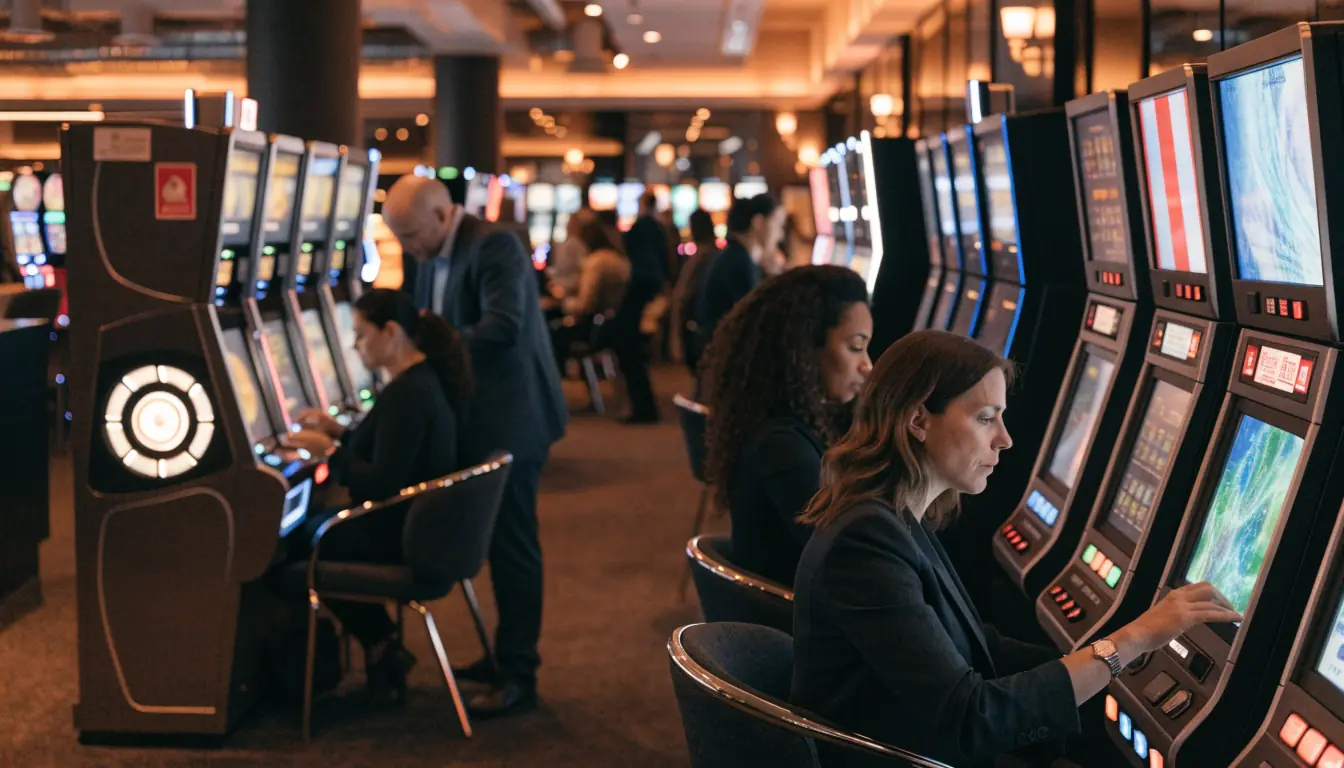
The practical implication is straightforward: the venue and format you choose changes the mathematical starting point of the game before you’ve even looked at a specific title. A game with an online RTP of 97% and a physically similar cabinet version running at 88% are not the same product wearing different skins — they’re different pieces of software with different payout design, even if the theme, symbols, and animations look identical.
What to actually check before playing a specific pokie
Once you understand RTP, volatility, and bonus buy mechanics as separate concepts, comparing individual games becomes a matter of reading the specification each title publishes rather than guessing from the theme or the reel graphics. A game’s information panel — usually accessed through an "i" icon or a paytable button — typically lists:
- RTP — the long-term theoretical return figure for that specific title.
- Volatility rating — low, medium, high, or an adjustable setting.
- Maximum win multiplier — the largest possible payout expressed as a multiple of the stake.
- Paylines or ways to win — the structure determining how symbol combinations pay.
- Special features — multipliers, respins, gamble features, and whether a bonus buy option exists.
As one concrete example of how these figures come together in a real title: Mighty Wild: Panther, a pokie reported in one industry review, carries an RTP of 96.15%, adjustable volatility, a maximum win of 750x the stake, and 15 paylines, with bonus buys, multipliers, respins, and a gamble feature built into the game. That combination illustrates the point made above about volatility and bonus buys not being separate from each other — a game with adjustable volatility lets the player choose how the 96.15% RTP is distributed across the session, while the bonus buy option offers a separate route into the feature round that the max win multiplier is attached to.
None of these figures tell you what will happen in your next session. What they do is let you compare one pokie against another on the same terms, the way you’d compare two products by reading their spec sheets rather than their marketing copy. A title with a high max win multiplier and high volatility is a fundamentally different bet, structurally, than a low-volatility title with a modest max win — even if both display an RTP in the high 90s.
Typically have RTPs of 85‑92 % and medium to high volatility due to venue overhead.
Usually offer RTPs of 96‑98 % with a broader range of volatility options, since operating costs are lower.
- Physical machines are limited to a single venue.
- Online games can be accessed from anywhere and often include bonus‑buy options.
Filtering and finding games that match how you want to play
Most online pokies libraries are large enough that browsing by theme alone isn’t a practical way to find a game suited to a particular session style. Players can filter games by provider, volatility, and features, which turns the search into a functional exercise rather than a scroll through hundreds of thumbnails. If the goal is a longer, steadier session, filtering for low-volatility titles from providers known for that style narrows the field considerably. If the goal is chasing a larger single win with the understanding that the session might end quickly, high-volatility titles with bonus buy options are the more honest match for that intent.
Game providers themselves often specialise in a particular style, which is part of why the provider filter is useful alongside the volatility filter. Some studios build titles skewed toward high-volatility, high-ceiling mechanics; others focus on smoother, more frequent-hit designs intended for longer play sessions. Checking which provider built a given title, alongside its individual RTP and volatility figures, gives a more complete picture than any one data point alone.

Cashless play and how it changes the pokie experience
A significant practical difference between a physical pokie session and an online one is how money moves in and out of the game. On a casino floor, that process is bound to the venue’s own cash and ticketing systems. Online, deposits and withdrawals run through the platform’s banking methods, and the pace of that movement is itself part of what separates one platform’s pokies experience from another’s — a subject covered in more detail in the next section on venue and platform choice.
What’s relevant here, at the level of understanding the product itself, is that online pokies are generally built around a persistent account balance rather than physical tokens or credits tied to a single visit. That balance carries across sessions, across devices, and across however many individual pokie titles a player moves between in a single sitting, which is part of why the filtering tools described above matter — the browsing experience is continuous in a way a casino floor isn’t.
Reading volatility and RTP together, not separately
It’s worth returning to the interaction between these two figures, because most of the practical decisions a player makes about pokies come down to reading RTP and volatility as a pair rather than in isolation.
RTP vs Volatility
High RTP combined with high volatility means the game pays back a large share overall, but wins come in rare, big bursts.
A high RTP with high volatility means the game is designed to pay back a large share of total wagers across many players and many spins, but that return is concentrated in comparatively rare, larger hits rather than spread evenly across the session. A high RTP with low volatility means a similar long-term return, delivered through more frequent, smaller wins. Neither is objectively "better" — they suit different session goals and different bankroll sizes. A smaller session budget generally pairs more comfortably with lower volatility, simply because the swings are smaller relative to the funds available to absorb them. A larger, more disposable budget can tolerate the swings of a high-volatility title without the session ending prematurely on a losing run.
This is the layer of understanding that makes the rest of the pokies conversation — which platforms host which games, what bonuses attach to them, what the payout benchmarks look like across physical and online formats — actually useful rather than just a list of names and numbers. Knowing what RTP promises and doesn’t promise, what volatility actually describes, and what a bonus buy changes about the shape of a session means you’re evaluating a specific game on its mechanics rather than its marketing.


Crown Perth and Online Casino Options: Legal Landscape and Player Choices
Western Australia regulates gambling more tightly than most other states, and that shapes what "playing pokies in Perth" actually means in practice. Physical access is limited by design, not by accident: the Gaming and Wagering Commission Act 1987 leaves Crown Perth as the only venue in the state licensed to operate traditional poker machines. There is no network of pub and club EGMs here the way there is in New South Wales or Queensland. If you want a physical machine, Crown Perth is the only legal option in Western Australia — that’s the entire brick-and-mortar market.
This scarcity is precisely why so many Perth players end up looking at online options instead. It’s worth being exact about what’s legal and what isn’t, because the two categories work under completely different rules.
Why there’s no such thing as a WA-licensed online casino
The Interactive Gambling Act 2001 is the Commonwealth law that governs this space, and it prohibits the provision of online casino games — slots, roulette, blackjack, poker — to Australian residents. This is a federal restriction, not a state one, and Western Australia’s own strict gaming laws sit on top of it rather than replacing it. There is no licence, state or federal, that lets an operator legally offer online pokies to someone in Perth. None exists, and none can be applied for domestically.
What the law does not do is criminalise the player. The Interactive Gambling Act targets operators, not individuals, so playing at an offshore-licensed casino is not an offence for someone in Perth. That distinction explains why offshore platforms remain the only way to play pokies online in this state at all: Australian players reach them from outside the country’s jurisdiction, and the platforms themselves are licensed elsewhere, most commonly by Curaçao eGaming.
Illegal Licence Claim
Any site that advertises an Australian online casino licence is misleading; such a licence does not exist for pokies.
Because none of these operators hold an Australian licence, you won’t find one displayed in a footer here the way you would for a wagering operator — there’s no local licence to show. Any site claiming an Australian online casino licence is misrepresenting its status, since no such licence exists for this kind of gambling in this country.
What offshore platforms typically offer
Offshore casinos serving Australian players tend to differ from Crown Perth in a few practical ways beyond just being online. Several platforms support crypto withdrawals that move faster than traditional banking rails — one operator review reported real-money withdrawal tests using both PayID and Bitcoin to compare turnaround times, with crypto coming out ahead. That’s a single data point rather than a market-wide guarantee, but it reflects a genuine difference in how these platforms are built: crypto rails bypass a lot of the friction that slows down card and bank-transfer payouts.
Welcome offers at these platforms generally combine a deposit match with free spins, structured to get new players into the game library without a large upfront outlay. The exact shape of these offers varies by operator, and this section isn’t the place to rank them — that’s covered in more detail elsewhere.

Identity checks and account limits apply either way
Whether you’re at a physical machine at Crown Perth or signing up with an offshore platform, the same basic safeguard shows up: no withdrawal happens until you’ve verified who you are with government-issued ID. This isn’t a formality unique to one venue — it’s a standard checkpoint before money moves in either direction.
Self-exclusion works the same way in principle. Crown Perth offers in-venue self-exclusion for the poker machines it operates, and reputable offshore platforms offer their own account-level exclusion tools. If you’re not sure where to start, Gamblers Help Australia is a free service that can point you toward the right process regardless of which venue — physical or online — you’re trying to step back from.
The bottom line on where you can legally play
| Option | Legal status | Access |
|---|---|---|
| Crown Perth poker machines | Licensed under WA law | In-person only, Perth |
| Offshore online pokies | Licensed elsewhere (e.g. Curaçao eGaming); not illegal for players to access | Online, from anywhere in WA |
| Domestic online casino | Does not exist | Not available at any price |
There’s no third option waiting to appear. Any advertising that implies an Australian-licensed online pokies site is either confused about the law or hoping you won’t check it. The two real choices in Perth are the single physical venue and the offshore market — and knowing which is which is the first step before comparing anything about bonuses, payment speed, or game selection.
Perth Pokies Payout Percentages: RTP Benchmarks and What They Mean
RTP, or Return to Player, is a theoretical figure calculated over a very large number of spins — millions, not the few hundred you’ll play in a session. It tells you what a game is designed to return over its full lifetime, not what any single session will pay out. A machine advertising a given RTP can still hand you a losing night or a lucky one; the number describes the long run, not the next spin.
Physical pokies and online pokies are built around different RTP ranges. According to one industry review of the sector, the machines inside a physical venue typically sit lower — in the mid-to-high 80s to low 90s percent — while online slots run considerably higher, often in the high 90s. That gap reflects overhead: a physical machine carries the cost of the venue itself, while an online title doesn’t.
Knowing which category a game falls into tells you roughly what to expect over time, though it says nothing about how the payouts are distributed along the way — that’s a separate question of volatility.
What does RTP mean in pokies?
RTP, or Return to Player, is a long-term theoretical measure of what a game pays back across hundreds of thousands or millions of spins. It doesn’t predict your next session, but it gives you a concrete spec to compare games—for example, physical pokies usually sit around 85%–92%, while online slots typically offer 96%–98%.
What should I look for in a casino?
Look at banking reliability and withdrawal speeds first, then the game library and welcome bonuses. You should also check if the platform holds a valid licence (such as Curaçao eGaming for offshore sites serving Australians), supports mobile-friendly interfaces, and offers features like fast crypto withdrawals or no-wagering bonuses.
How can a player verify that an online casino holds a valid licence in Australia?
Physical pokies are restricted entirely to Crown Perth in Western Australia. For online platforms serving Australians, licensing is handled offshore—typically by Curaçao eGaming. You can verify an operator’s licence by checking the footer of the casino website for their licence number and then confirming it against the regulator’s official registry.
What should players consider when choosing a pokie game?
Check the game’s RTP and volatility rating before committing money. Volatility dictates how bumpy your session will be—high-volatility games pay larger wins less often and can drain a fixed budget quickly, while low-volatility games pay smaller amounts more frequently, making your budget last longer.
Is it legal to play at online sites like Rolling Slots in Perth?
Western Australia has some of the strictest gaming laws in the country, limiting physical machines to Crown Perth. However, Australian players can legally access online pokies via offshore casinos like Rolling Slots, which operate under international licences such as Curaçao eGaming.